Las Loicas
Adventures
Exploring Beyond Las Loicas
One of the beautiful things about Tierra del Fuego is how many different journeys can be combined across the island and even across the border into Chile.
Many guests combine a stay at Las Loicas with time in Ushuaia or along the Beagle Channel, for example visiting Estancia Harberton. Others continue toward more remote places such as Peninsula Mitre or Bahía de los Renos.
Travelers coming from Chilean Patagonia can also reach Las Loicas after visiting Torres del Paine National Park or Puerto Natales. From there, they can continue toward Río Grande and then drive to Las Loicas on the Atlantic coast.
After spending a few days at the estancia, the journey can continue south through Tierra del Fuego toward Ushuaia and the Beagle Channel, crossing forests, mountain passes and the changing landscapes of the island along the way.
It is also possible to cross into the Chilean side of the island and combine the trip with places like Deseado Lodge and other remote estancias of southern Patagonia.
During the summer months, another beautiful route is to start in Ushuaia, stay a few days at Las Loicas and then continue north toward the remote Bella Vista border crossing into Chile. From there, the journey can continue toward places like Deseado Lodge and the Chilean side of Tierra del Fuego.
We believe Tierra del Fuego deserves time. Distances are large, roads are slow and every part of the island feels different. Many travelers underestimate how big this region really is.
For us, the beauty of Tierra del Fuego is not only about visiting famous places, but about the journey itself — the changing landscapes, the weather, the conversations along the way and the feeling of slowly moving through one of the last truly remote regions of Patagonia.

Las Loicas
Adventures
Antarctica expedition
Go on Antarctica expedition with Bark Europe
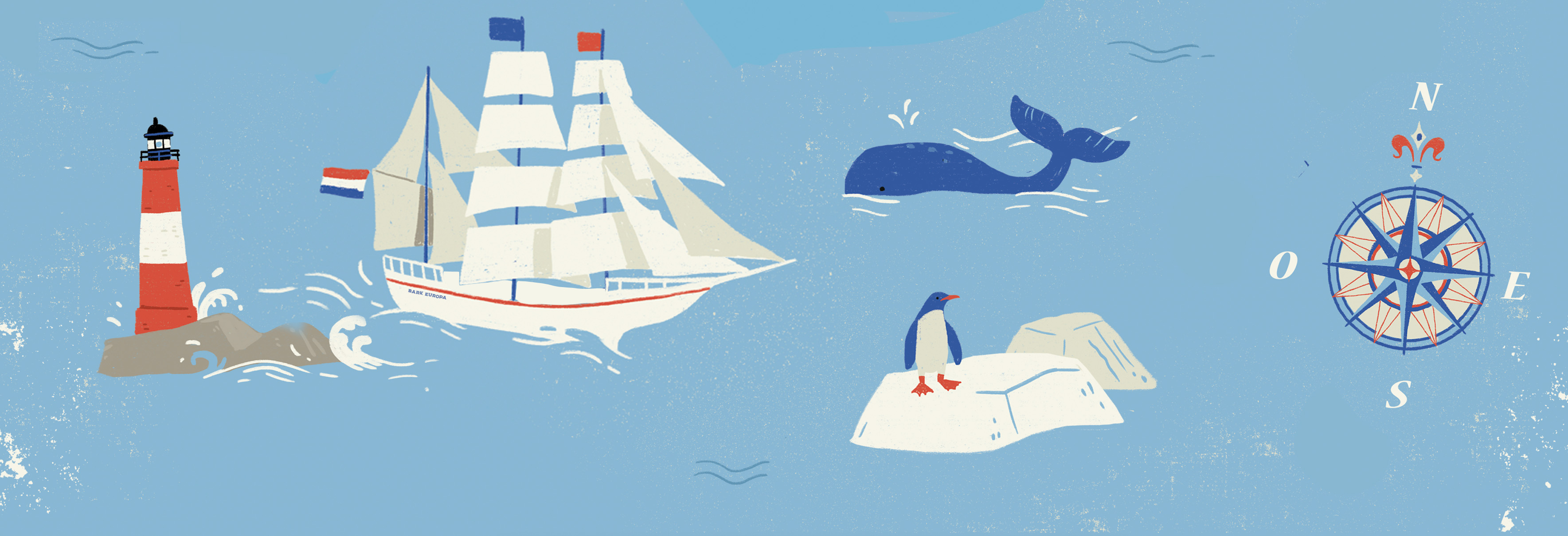
For guests who feel drawn to the sea and the polar regions, Las Loicas can also be the beginning of a much larger adventure: an expedition to Antarctica aboard Bark EUROPA.
Bark EUROPA is one of the only tall ships still sailing regularly to Antarctica. Originally built in 1911 in Germany, the ship has spent decades exploring remote parts of the world under sail and has become well known for her expedition voyages to the Antarctic Peninsula, South Georgia and beyond.
Leentje worked for almost fourteen years as Director of Bark EUROPA and remains closely involved with the Antarctic program today. Because of this long connection, Las Loicas naturally attracts many guests who are interested in exploration, sailing and remote destinations.
What makes a voyage aboard EUROPA different from most Antarctic cruises is the pace and style of travel. With a maximum of only 40 guests on board and an international crew of around 18 people, the atmosphere is personal, hands-on and closely connected to the experience of the sea itself.
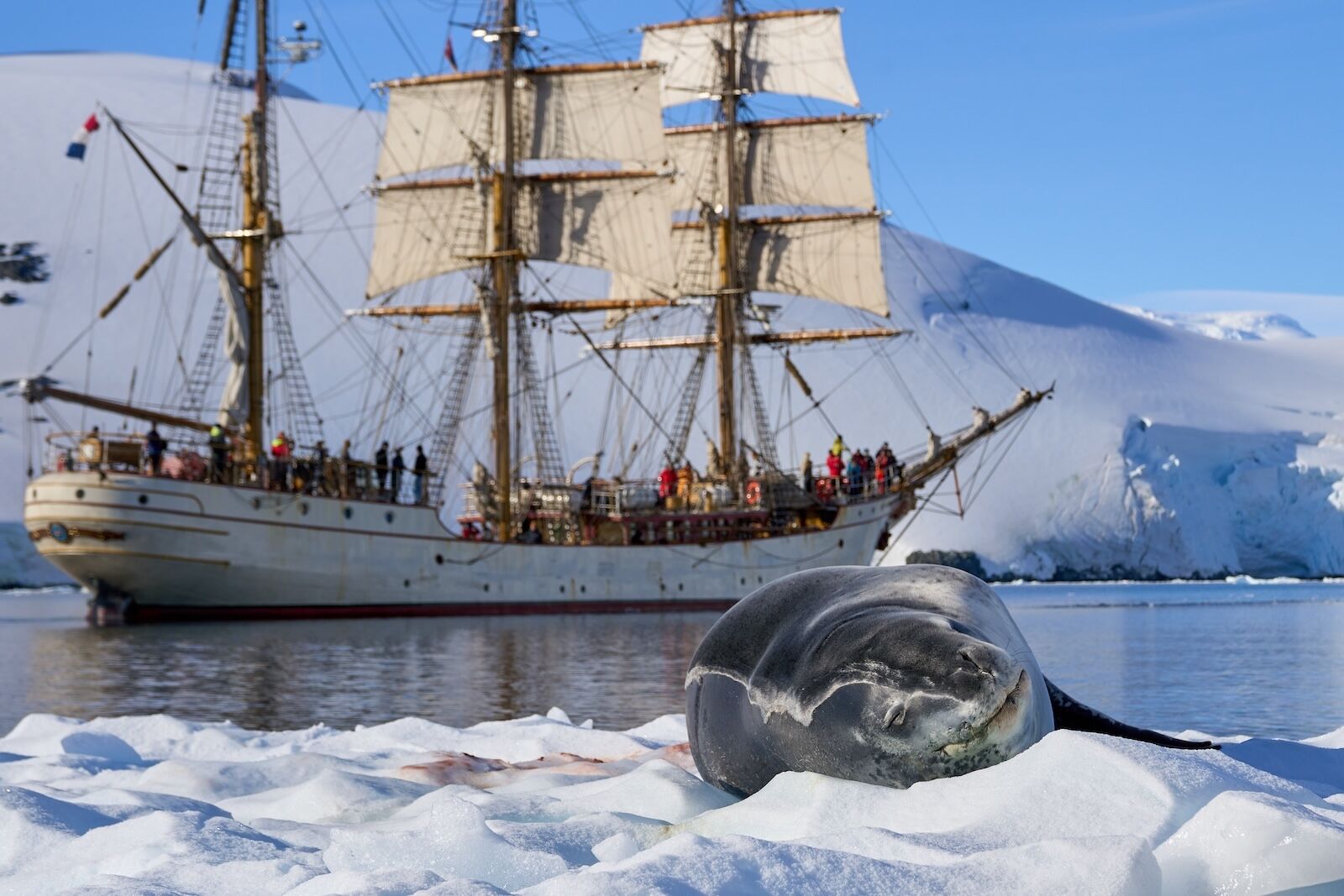
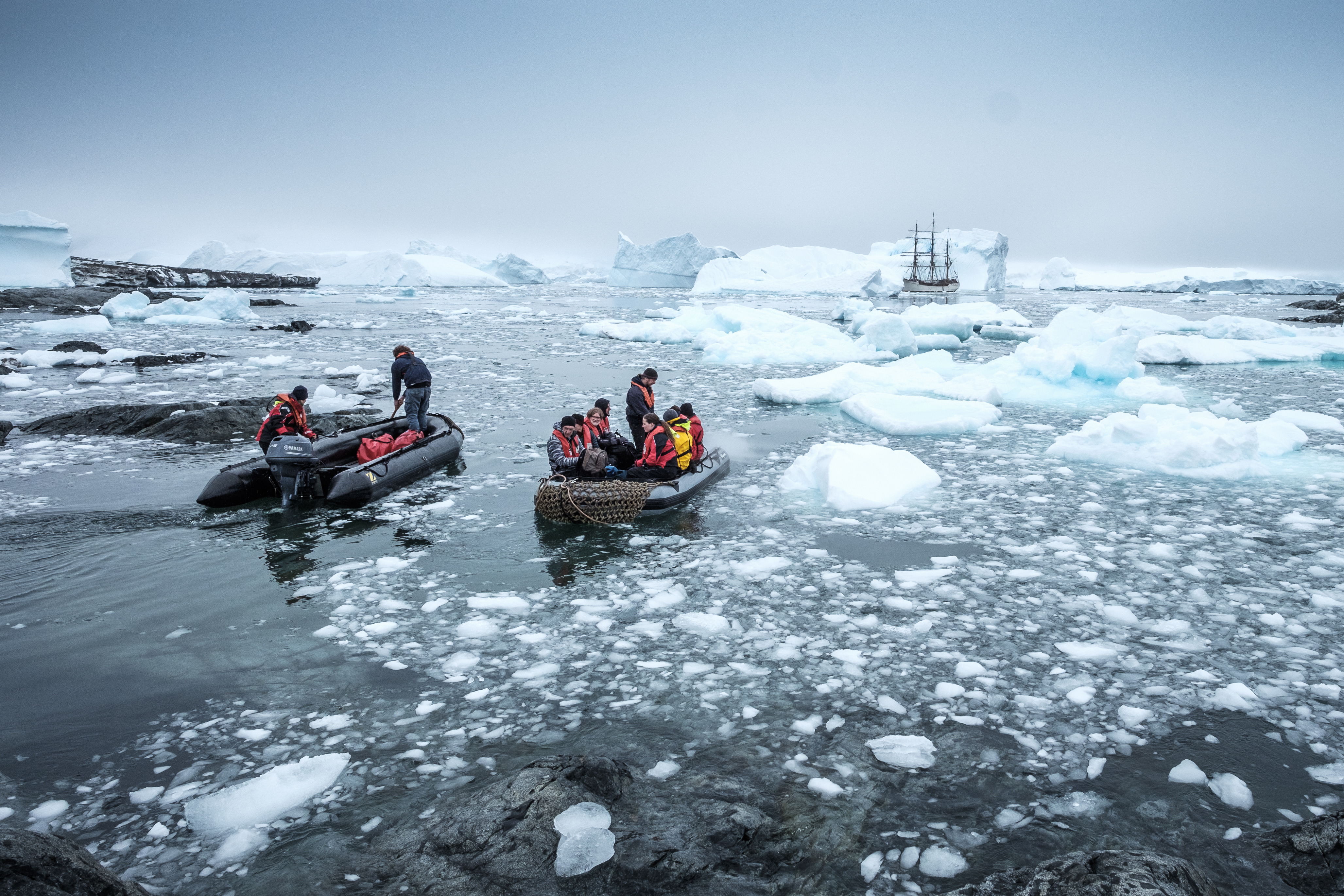
Crossing the Drake Passage under sail becomes part of the journey rather than simply transportation. Guests can help hoist sails, spend time on deck, learn about navigation and become part of daily life aboard the ship.
The Antarctic voyages usually last around three weeks, allowing much more time in Antarctica than many shorter cruise itineraries. This slower pace creates more opportunities to explore the landscape, wildlife and silence of the White Continent in a deeper way.
Las Loicas
Antarctica expedition
Leentje Toering & Hernán Baserga
Las Loicas
Adventures
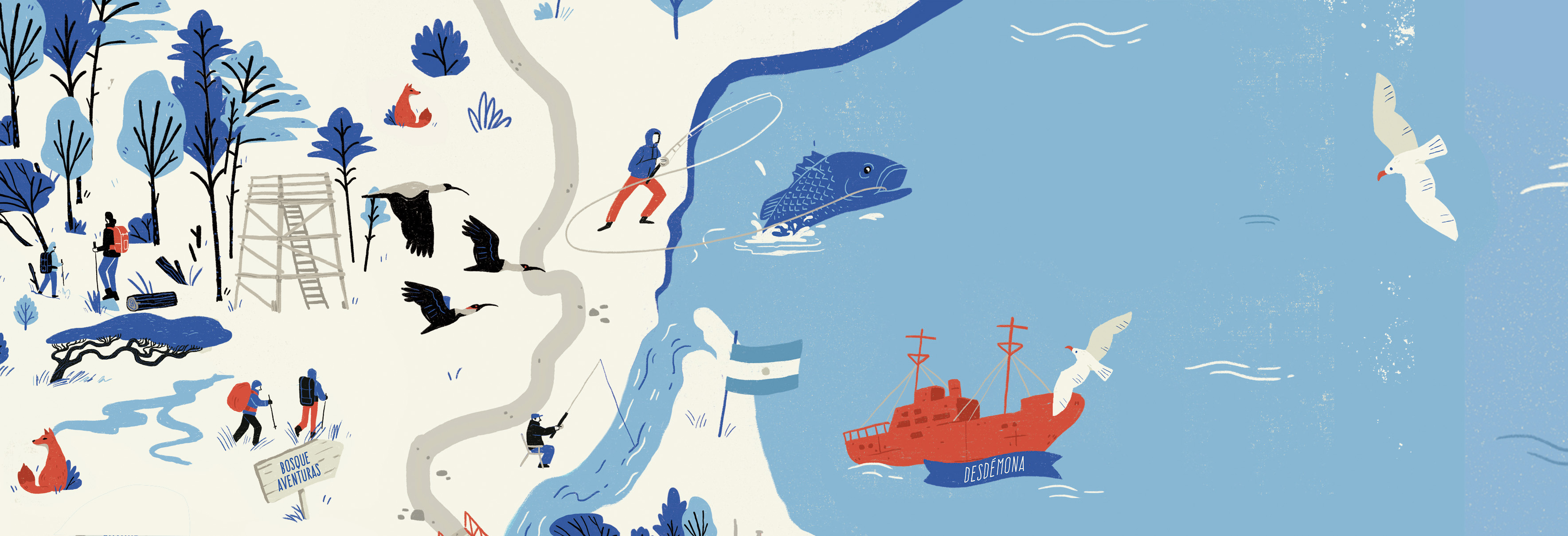
Adventure forest
Explore our Adventure Forest, over 60 hectares of native woodland
More than 85% of Estancia Las Loicas is covered by native forest. Most of it consists of ñire trees, while some areas are home to impressive lenga trees, many of them more than a century old.
Our forest is wild and untamed. As you walk through it, you will notice barba de viejo hanging from the branches. This lichen only thrives where the air is exceptionally clean, making it a natural indicator of the purity of this environment.
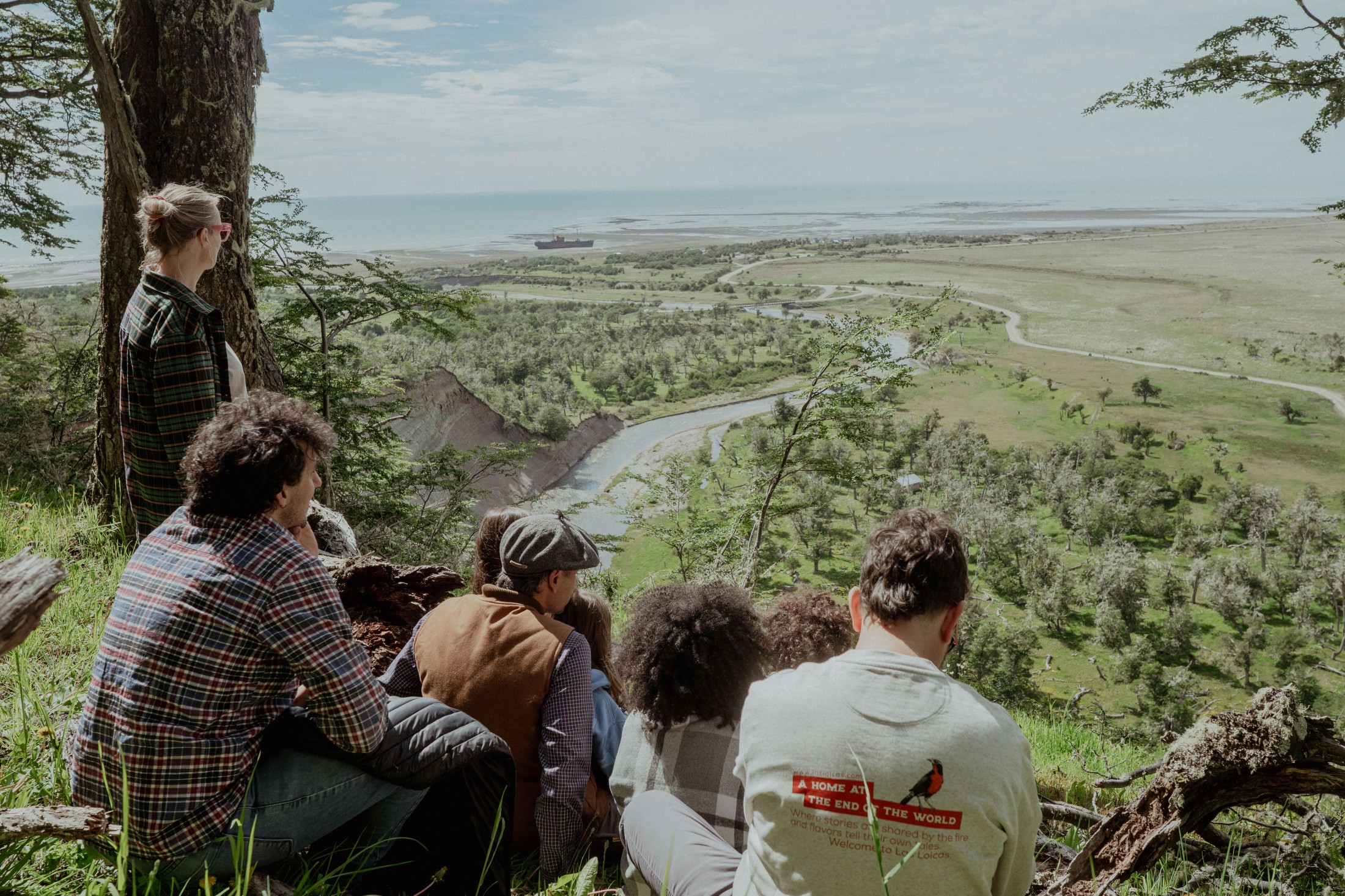
Rather than actively managing the forest, we have chosen to let nature take the lead. Large parts of the woodland are left to regenerate naturally, allowing the ecosystem to recover and evolve at its own pace.
To explore this remarkable landscape, we have created a number of trails that wind through the forest. These routes can be explored on foot or as part of one of our small adventures by horse or quad, offering a chance to experience a side of Tierra del Fuego that few visitors ever see.
Las Loicas
Adventures
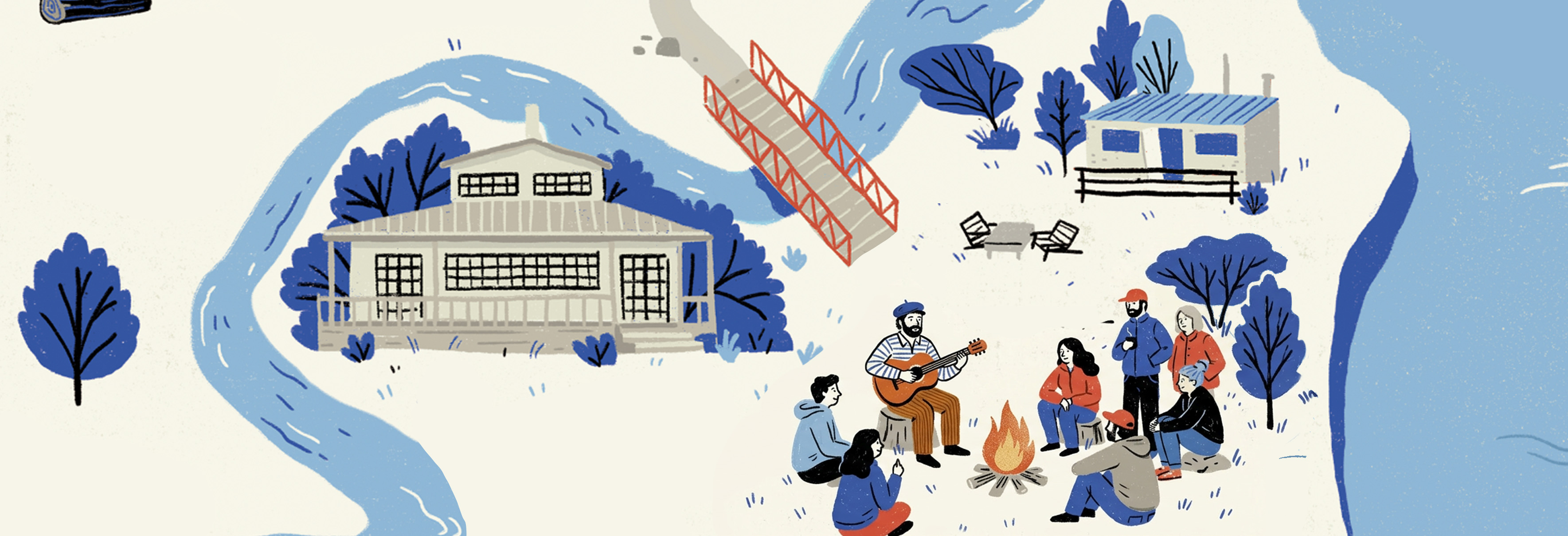
Las Noches del Loica
Intimate heartfelt evening where nature, music, food
Intimate heartfelt gatherings where food and music come together
At Las Loicas we enjoy bringing people together around food, music and the fire. Sometimes these are quiet evenings, other times long Sunday afternoons inspired by the traditional Argentine día de campo, where people gather to eat, listen to music and spend time together.
These moments are closely connected to the culture of Patagonia and to the atmosphere we want to create at the estancia. Preparing an asado, cooking fresh fish together, opening a bottle of wine or simply sitting around the fire while someone picks up a guitar.
Music and storytelling are an important part of Argentine folklore culture and something very close to Hernán’s heart. Many gatherings naturally turn into shared songs, conversations and stories that continue long after the meal.
Las Loicas
Las Noches del Loica
Leentje Toering & Hernán Baserga
Las Loicas
Adventures
Argentine asado or cordero
Gather around the fire and enjoy
In Argentina, an asado is much more than simply preparing food. It is one of the country’s most important traditions. It is a moment where family and friends gather, open a good bottle of wine and spend time together.
At Las Loicas, the asado is an important part of life at the estancia and closely connected to the culture of Patagonia and the Argentine countryside. Meat is slowly cooked over wood and coals, often for several hours, while everyone gathers around the fire waiting, talking and enjoying the atmosphere together.
Depending on the occasion and the season, we may prepare different cuts of meat or a traditional Patagonian cordero (lamb), slowly roasting over the fire. Together with local wines, fresh salads from the garden and the setting of the estancia, it becomes much more than a meal.
The process itself is part of the experience. In Argentina, people do not rush an asado. The fire takes time and the gathering often lasts for an entire afternoon or evening. Sarah is now also slowly learning the tradition and proudly hopes to become an asadora one day.
Las Loicas
Argentine asado or cordero
Leentje Toering & Hernán Baserga
Las Loicas
Adventures
Mountainbiking from Las Loicas
Exploring the area on our mountainbikes
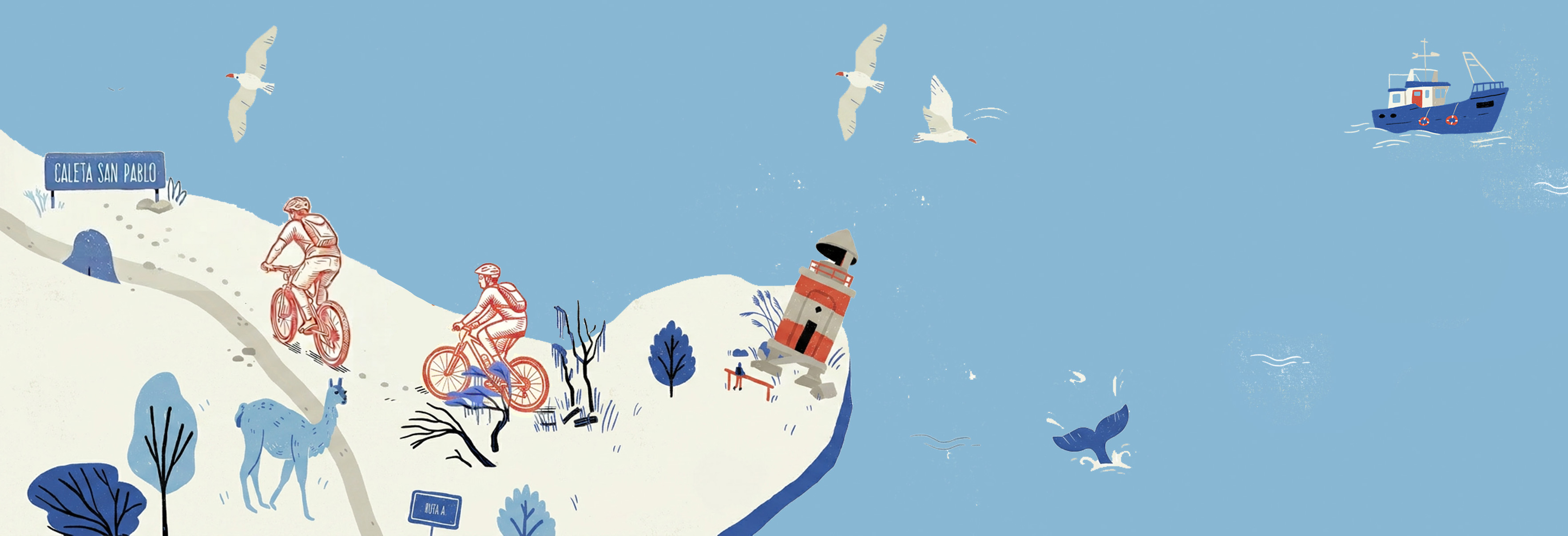
The landscapes around Las Loicas are perfect to explore by mountain bike. Wide gravel roads, quiet coastal tracks and endless open space make cycling here feel very different from anywhere else.From the estancia you can ride toward the Cabo San Pablo lighthouse, follow the coastline along the Atlantic Ocean or head deeper into the surrounding estancias and remote landscapes.
Along the way you may pass guanacos, sheep, rivers, forests and long empty beaches, often without seeing another person for hours. The weather and the wind are always part of the adventure here, sometimes challenging, but also part of what makes the experience so memorable.
Las Loicas
Mountainbiking from Las Loicas
Leentje Toering & Hernán Baserga
Las Loicas
Adventures
Cabo San Pablo & The Atlantic Coast
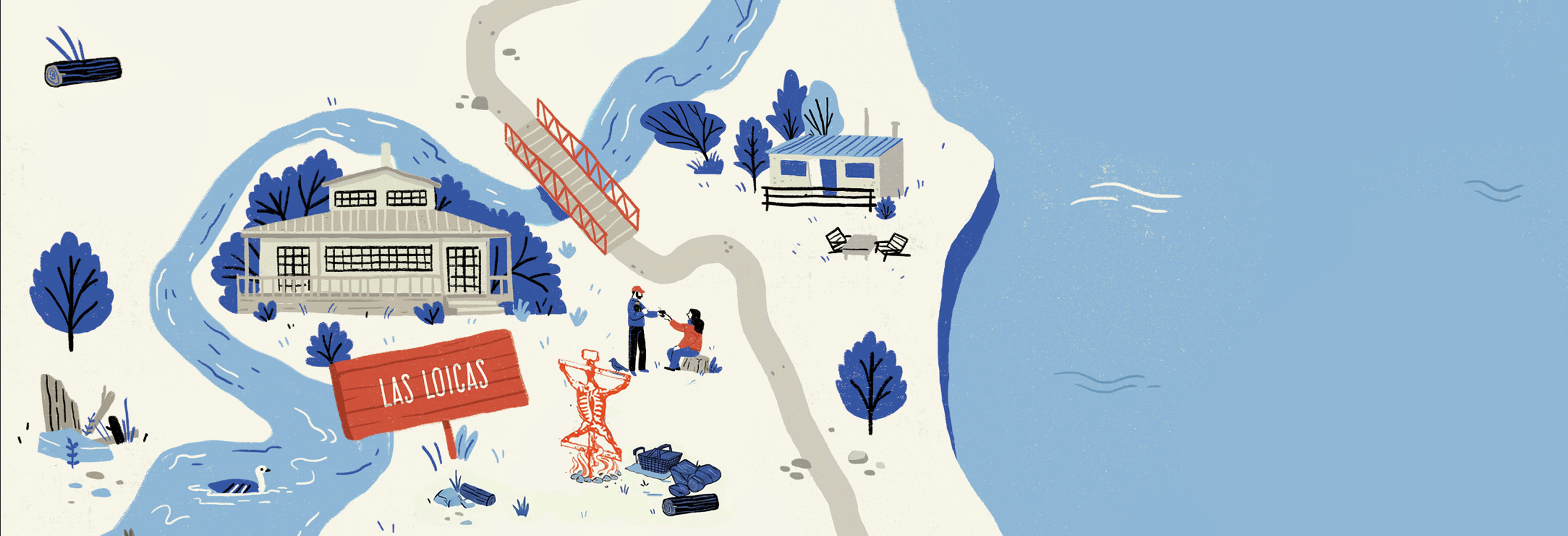
Estancia Las Loicas is located near Cabo San Pablo, on one of the most remote coastlines of Tierra del Fuego.
This region was shaped by the great sheep farming estancias of the early 20th century. Large properties stretched across huge parts of the island, connected only by rough tracks, horses and the hard work of the people living here. Even today you still find traces of that history in abandoned fences, old shearing sheds and forgotten machinery slowly disappearing into the landscape.
Long before the arrival of the estancias, these lands belonged to the Selk’nam people, who moved across the island following the seasons and the guanacos. Their connection to nature and understanding of this environment still feels present in the silence and openness of the steppe.
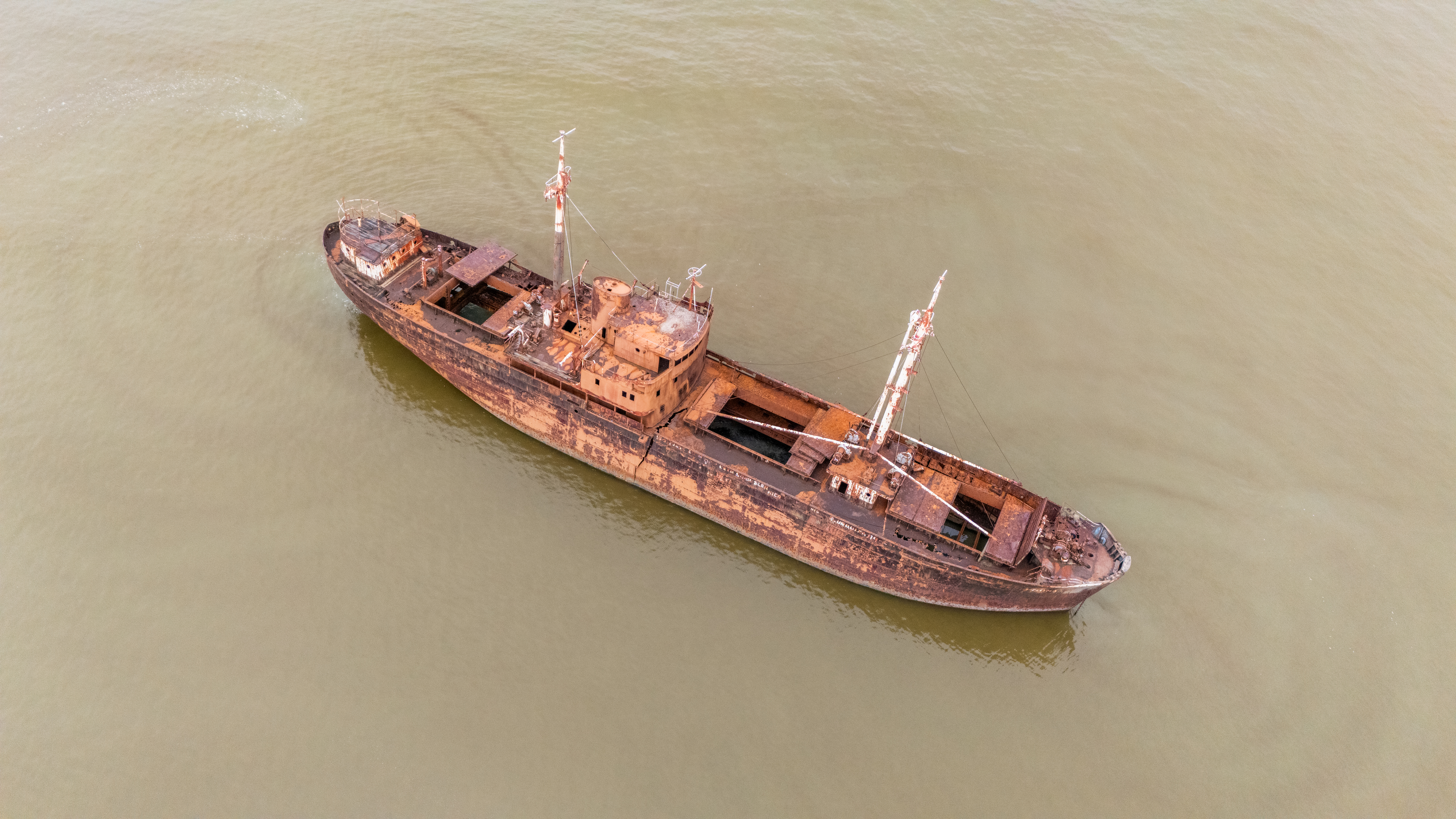
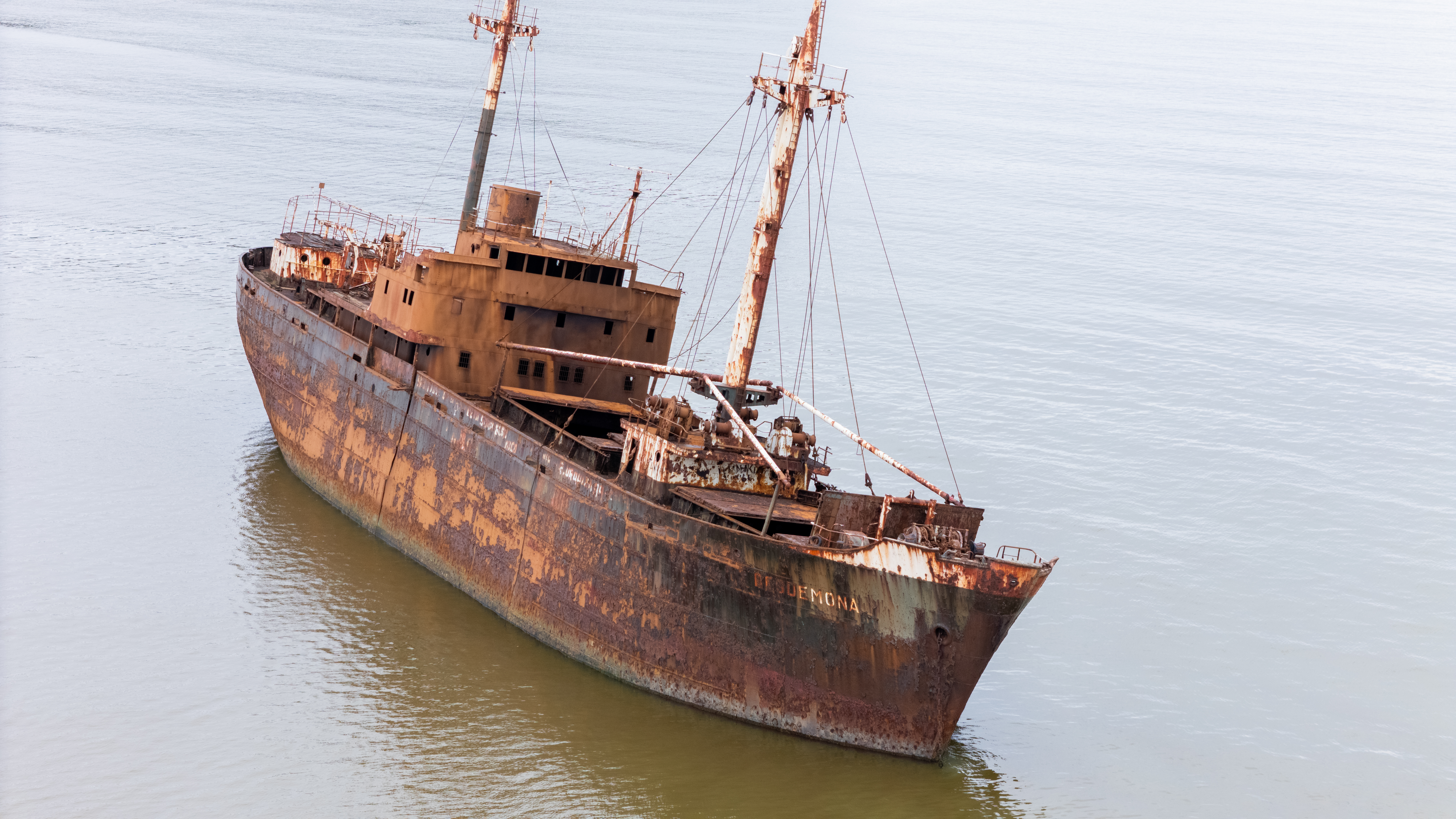
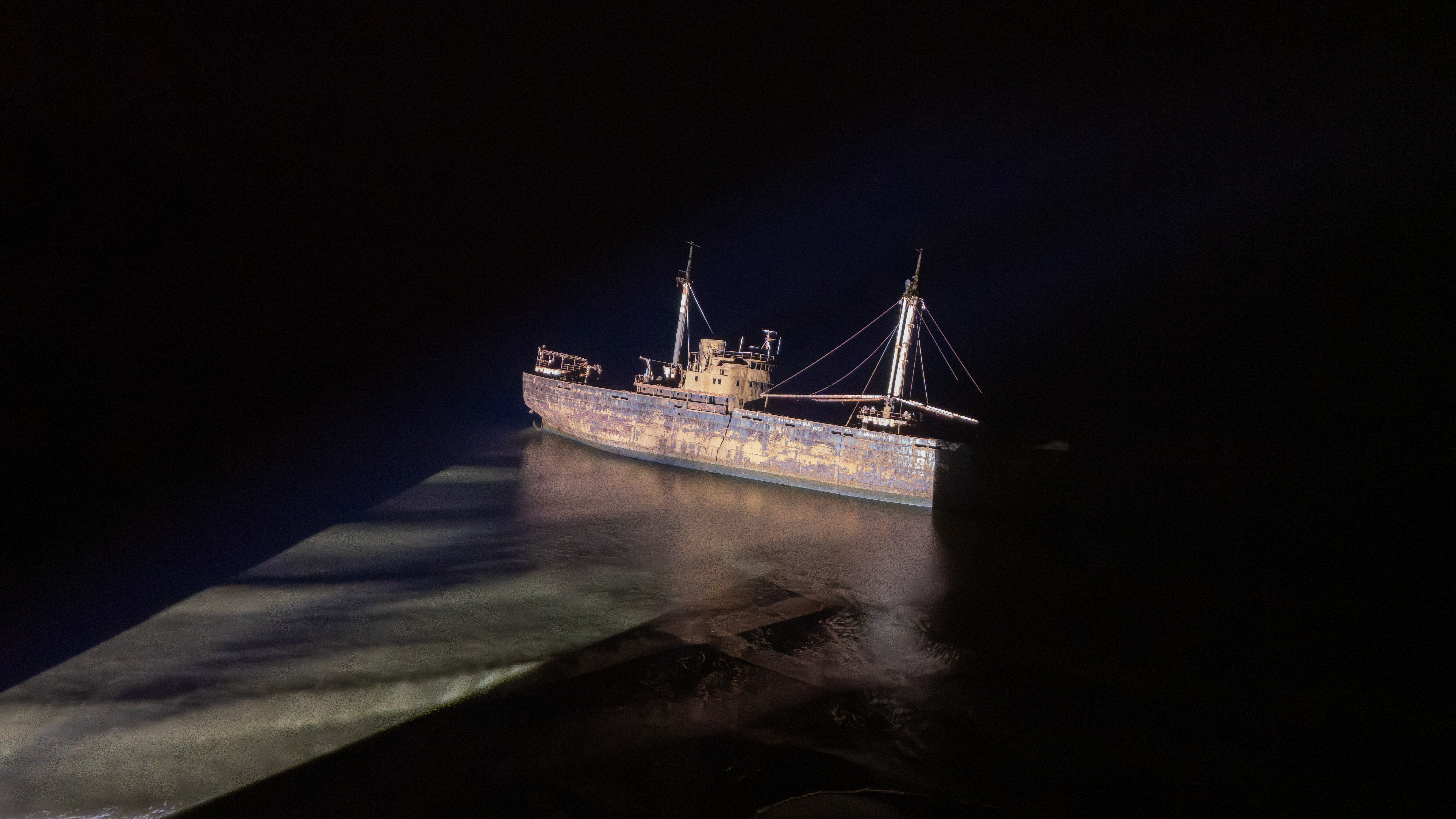
Cabo San Pablo also became known for its maritime history. The Atlantic coast here is beautiful but unforgiving, with strong winds, currents and rapidly changing weather. The Desdémona shipwreck resting on the beach below the lighthouse became one of the best-known symbols of this coastline.
Today, very few travelers reach this part of Tierra del Fuego. That is exactly what makes it so special. It remains a place of wide landscapes, empty beaches, strong winds and a feeling of freedom that is becoming harder to find elsewhere.
Las Loicas
Adventures
Visiting the Desdémona
Explore the the wreck from the coast
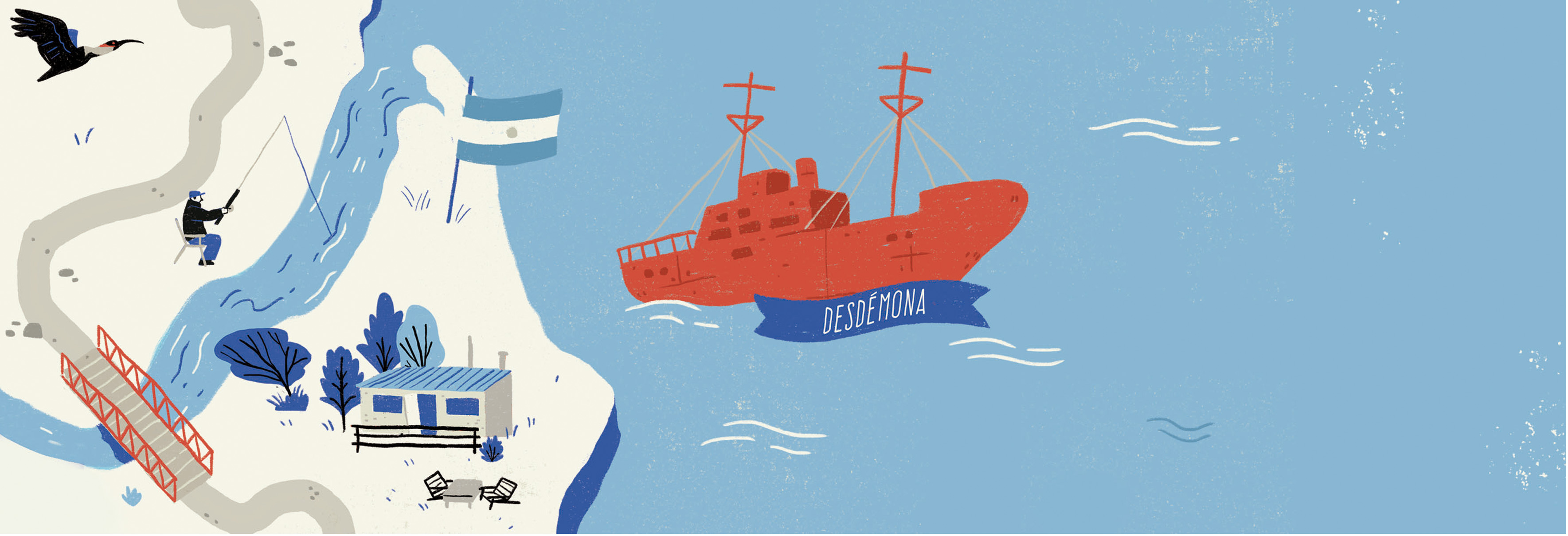
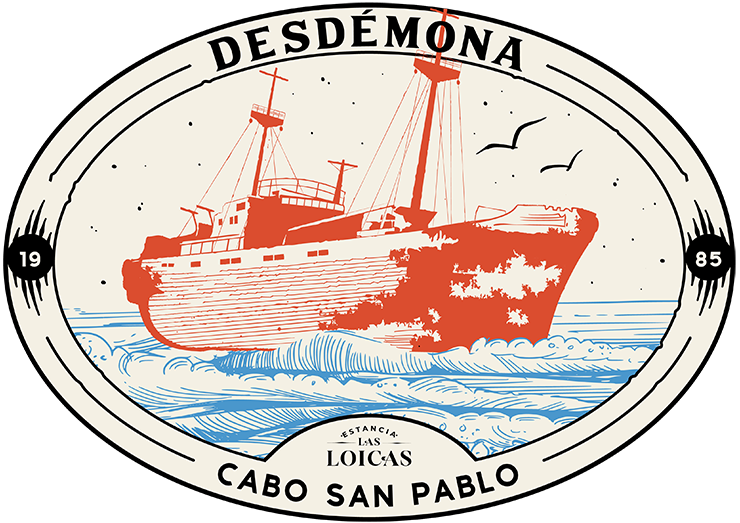
Right in front of Las Loicas lies the Desdémona, one of the most iconic shipwrecks of Tierra del Fuego. Resting on the beach below the estancia, the old cargo ship has slowly become part of the landscape itself. From our house you can see her masts rising above the shore.
The Desdémona ran aground in 1985 after suffering technical problems while navigating the waters of Tierra del Fuego. Before reaching Cabo San Pablo, the ship had already stopped in Ushuaia for repairs, but continued its journey north with limited engine power and a cargo of cement on board.
What exactly happened near Cabo San Pablo remains part of local legend. Some say the captain intentionally beached the vessel to protect the crew from the storm and prevent the ship from sinking. Others believe there was more behind the story. Like many shipwrecks at the end of the world, the Desdémona slowly became surrounded by mystery and rumors.
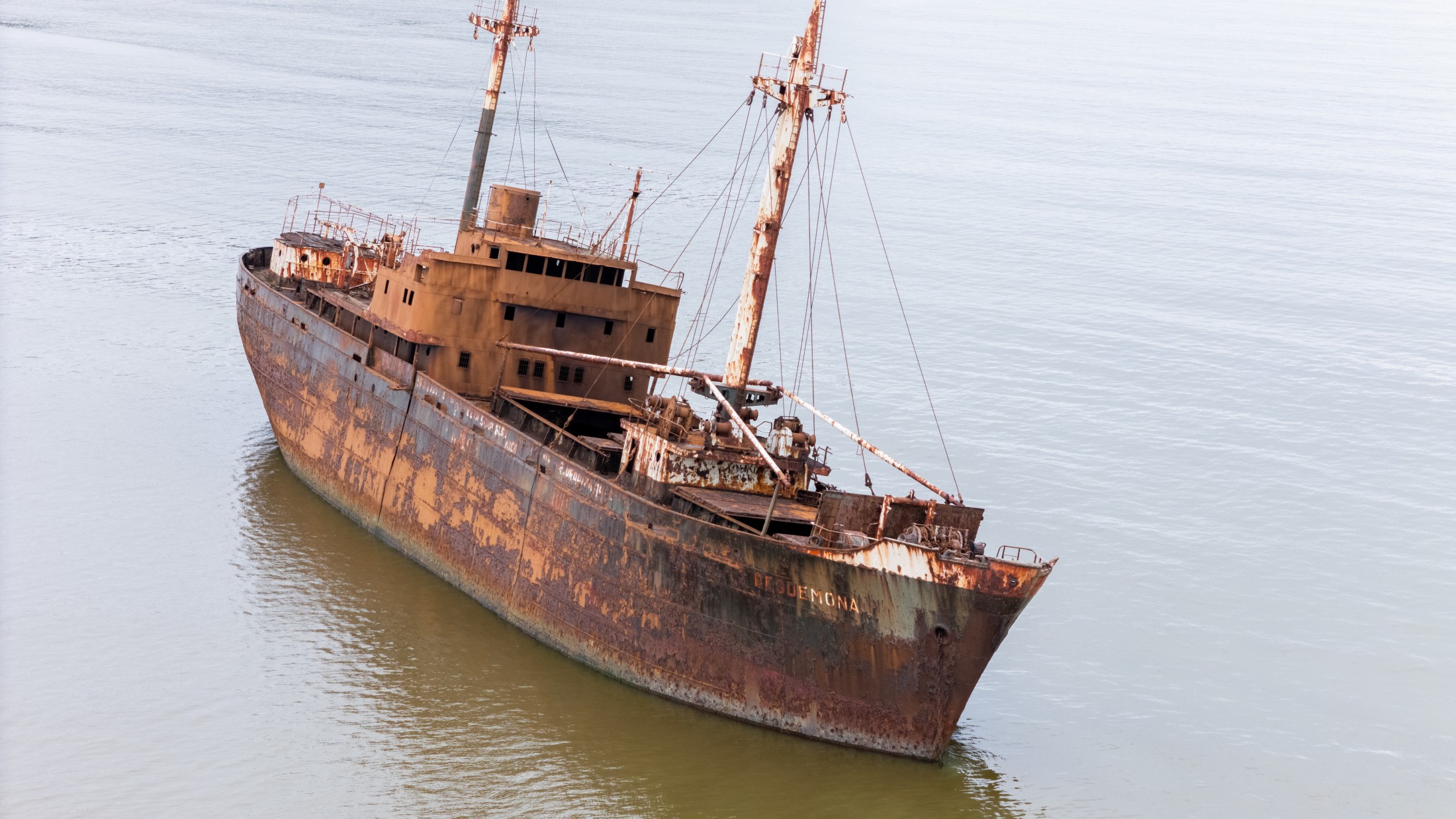
Today it is possible to walk down to the wreck from the estancia and explore the area from the beach. Standing next to the enormous rusting hull, with the Atlantic Ocean and the lighthouse nearby, gives a real sense of the isolation and maritime history of Cabo San Pablo.
Las Loicas
Visiting the Desdémona
Leentje Toering & Hernán Baserga
Las Loicas
Adventures
Seasons and weather in Tierra del Fuego
Life in Tierra del Fuego is shaped by the seasons, the wind and the constantly changing weather.
Summer, from November until March, brings long days and soft evening light that sometimes lasts almost until midnight. Temperatures are generally mild, usually between 8 and 15°C, and this is the best season for exploring the island, hiking, fishing and spending long days outside.
Autumn transforms the forests into deep reds and golds. The air becomes colder and clearer, and the island feels quieter after the busy summer season.
Winter brings snow, frost and powerful storms moving across the Atlantic coast and the steppe. It is a season that feels raw and isolated, but also incredibly beautiful for those who experience it.
Spring is the season of movement and return — migratory birds arrive again, rivers begin to thaw and the island slowly comes back to life.
Throughout the year, the wind remains a constant presence. Some days it is gentle, other days it completely shapes the rhythm of life. It influences the trees, the landscape and even the way people move through the day.
The weather here can change very quickly. Sunshine, rain, strong wind and even snow can all happen within a few hours. That is why in Tierra del Fuego people often say: always be prepared for four seasons in one day.
The air is incredibly pure and clean. In the forests around Las Loicas you can even see old man’s beard lichen hanging from the trees, something that only grows where the air quality remains untouched.
Las Loicas
Adventures

Faro Cabo San Pablo
Trekking to the historic Cabo San Pablo Lighthouse
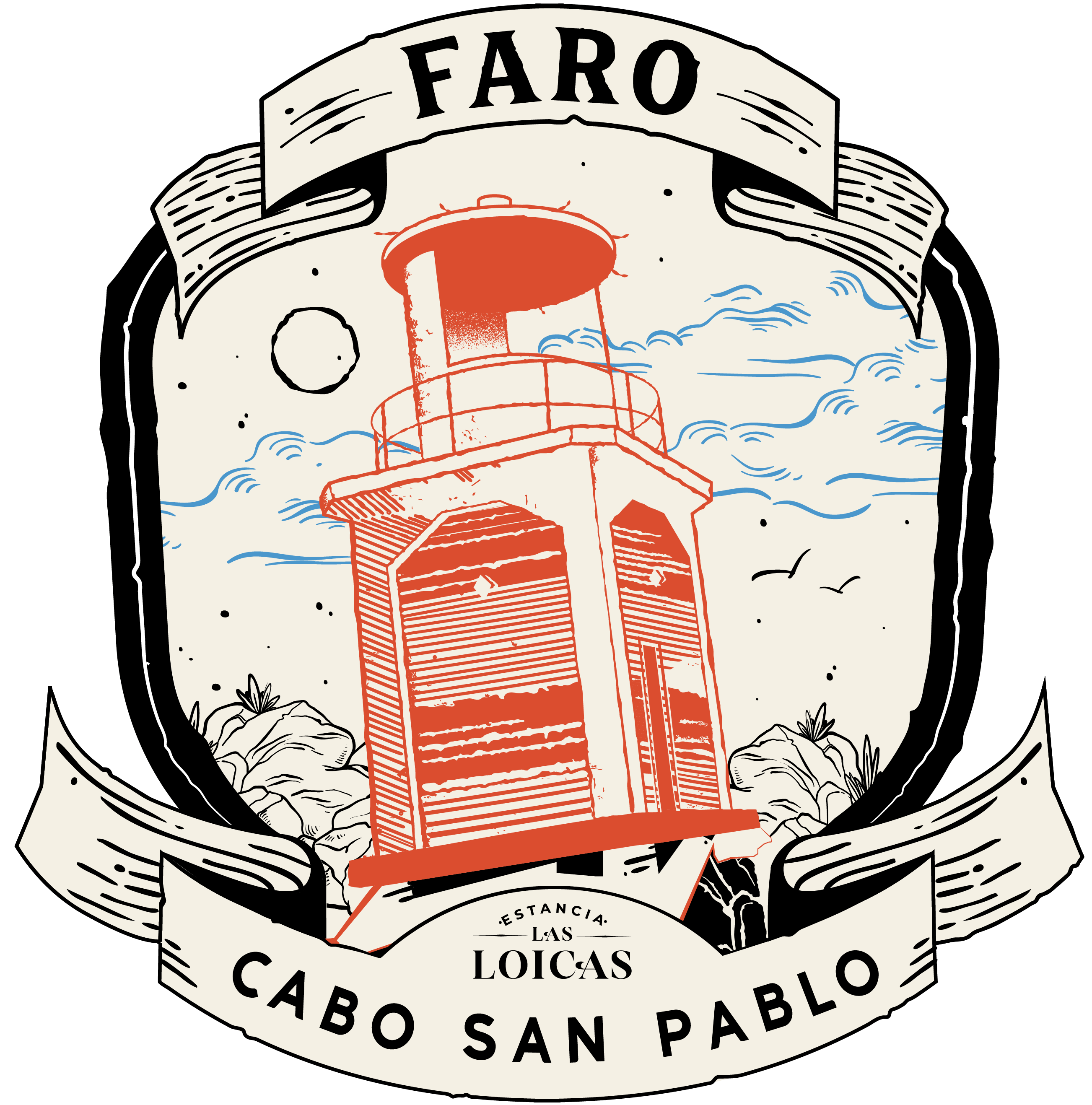
Close to our farm you can find the historic Cabo San Pablo Lighthouse, one of the most iconic landmarks of this remote part of Tierra del Fuego.
If you are up for it you can go for a nice walk along the shoreline to the lighthouse. The Atlantic Ocean, the strong winds and the wide empty beaches create a feeling of space and isolation that is hard to describe. Along the way you may spot guanacos, seabirds and the old Desdémona shipwreck resting quietly on the beach below.
The lighthouse was built in the 1940s to help guide ships navigating these difficult Atlantic waters, a coastline long known for strong winds, changing weather and shipwrecks. From the hill where the faro stands, you have wide views over the ocean, the surrounding estancias, the beach and our own property below.
In December 1949, a seismic movement bent the tower, forcing the removal of the illumination equipment and the deactivation of the signal. Today, the lighthouse no longer operates, but it remains standing as a quiet reminder of the history of this coast and the people who once lived and worked in these isolated conditions.
The faro has become a symbol of Cabo San Pablo itself; remote, weathered and deeply connected to the landscape around it. On windy days, standing there overlooking the Atlantic, you truly feel the raw spirit of Tierra del Fuego.
Las Loicas
Adventures

Food experience
Food is an important part of life at Las Loicas. Not in a formal way, but in the simple experience of gathering around the table, cooking together and sharing good food after a day outside.
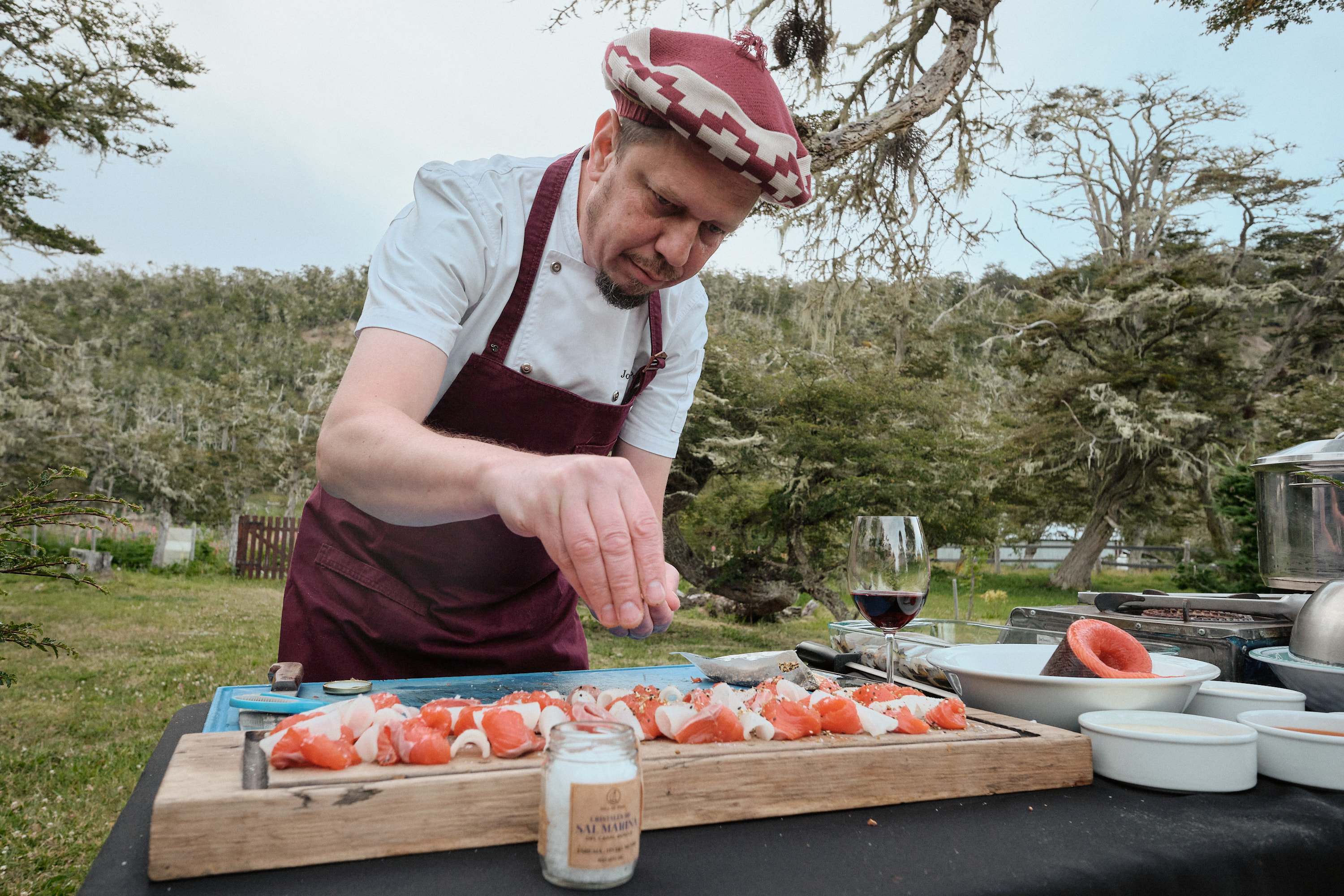
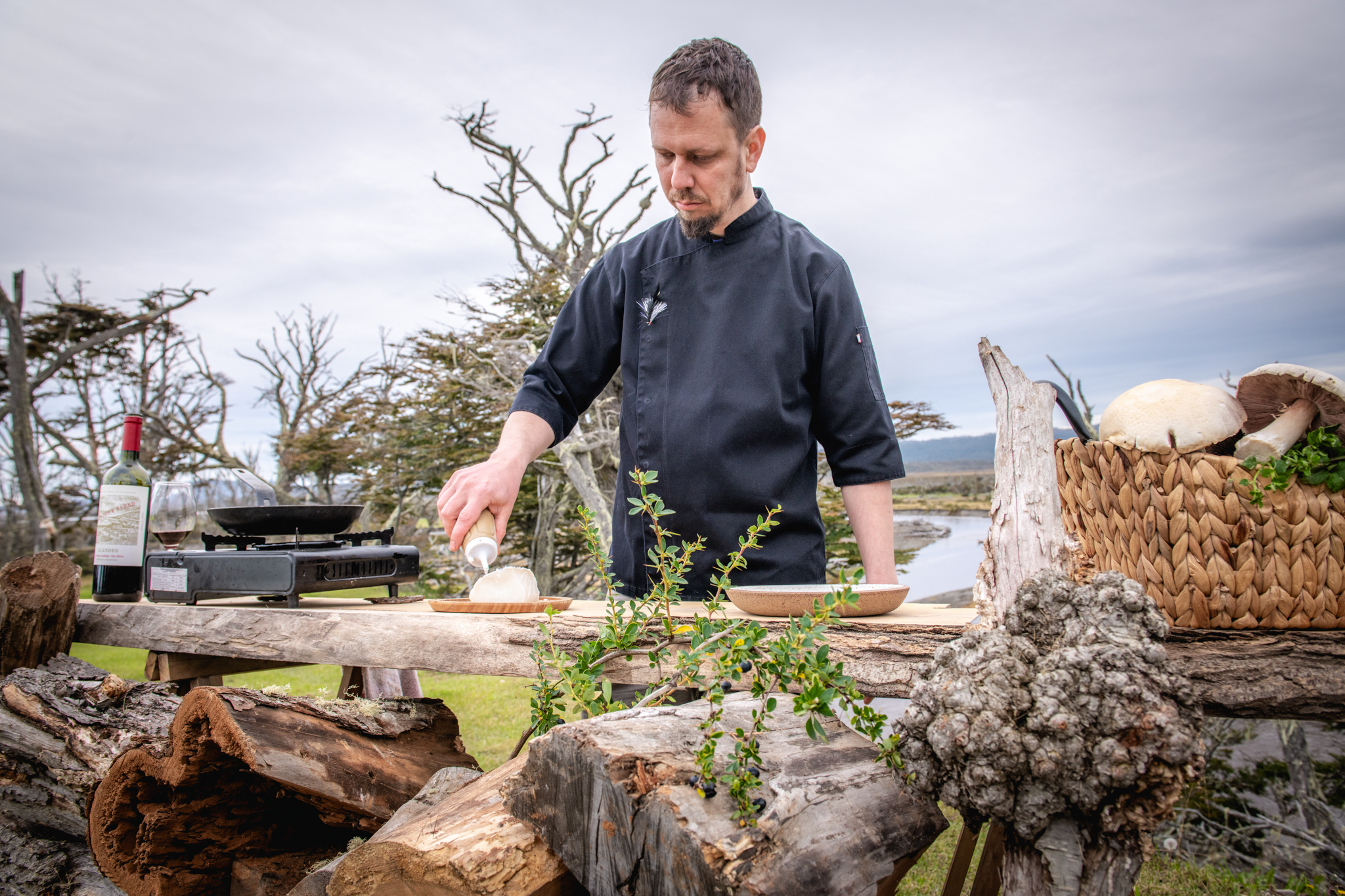
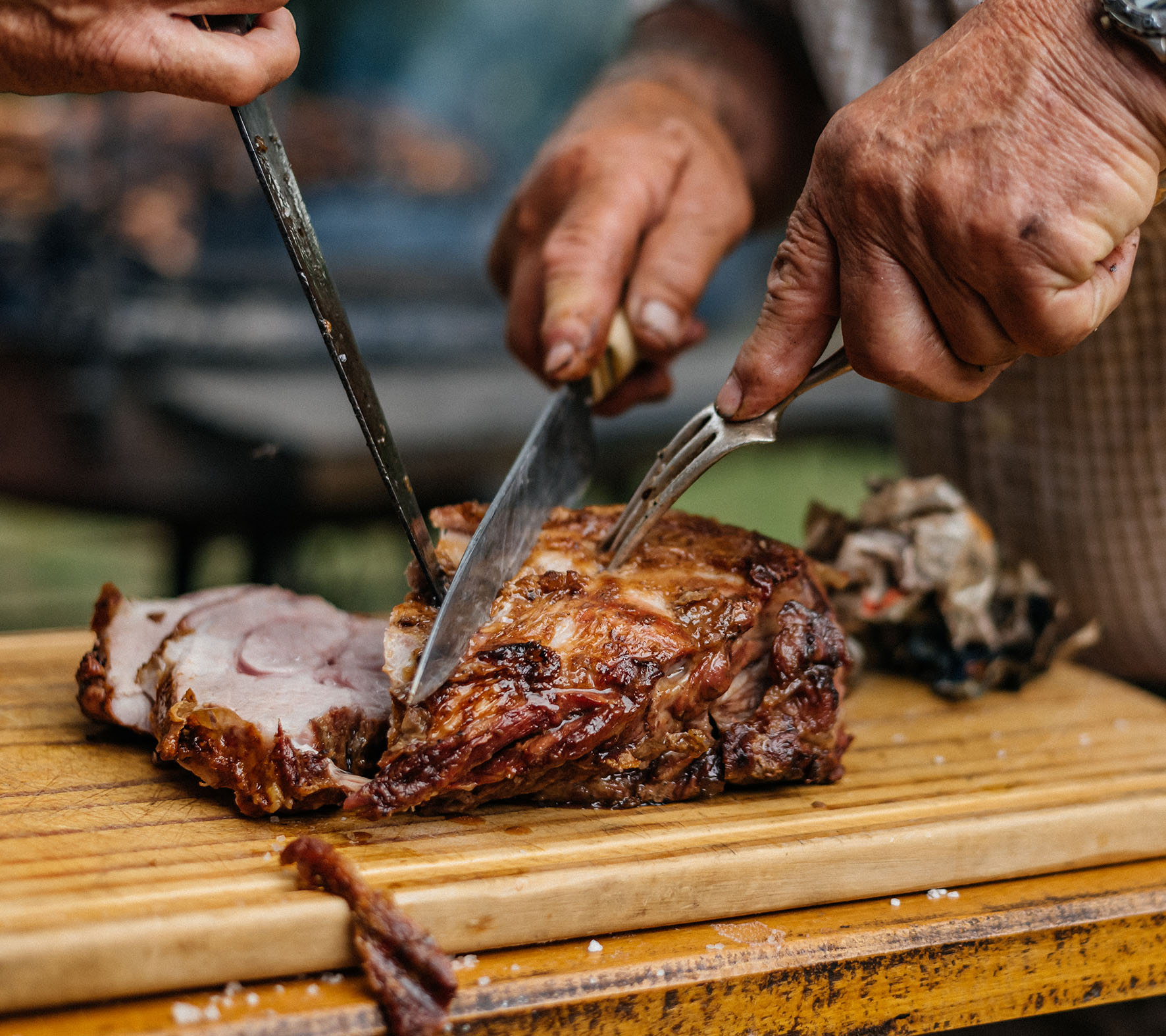
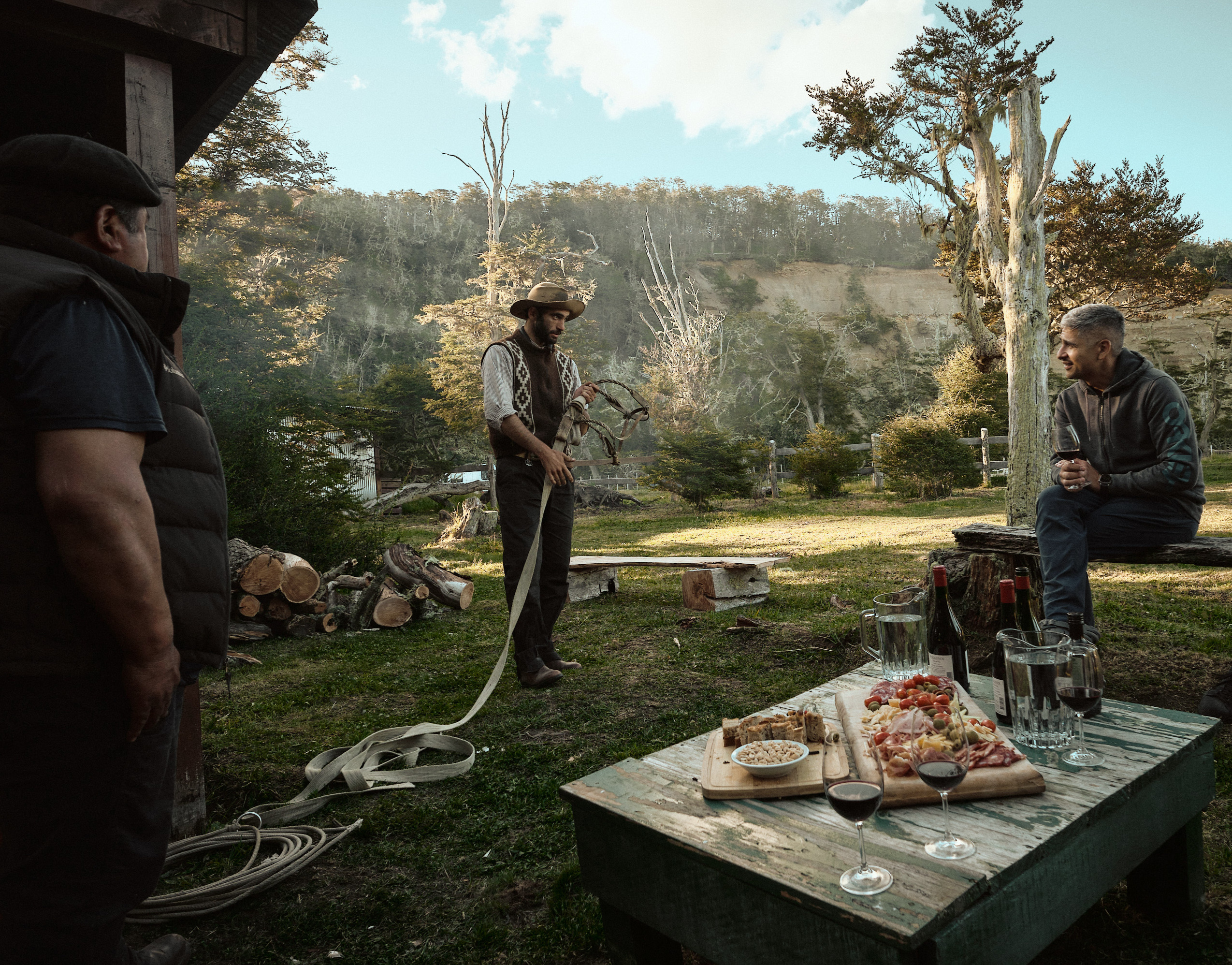
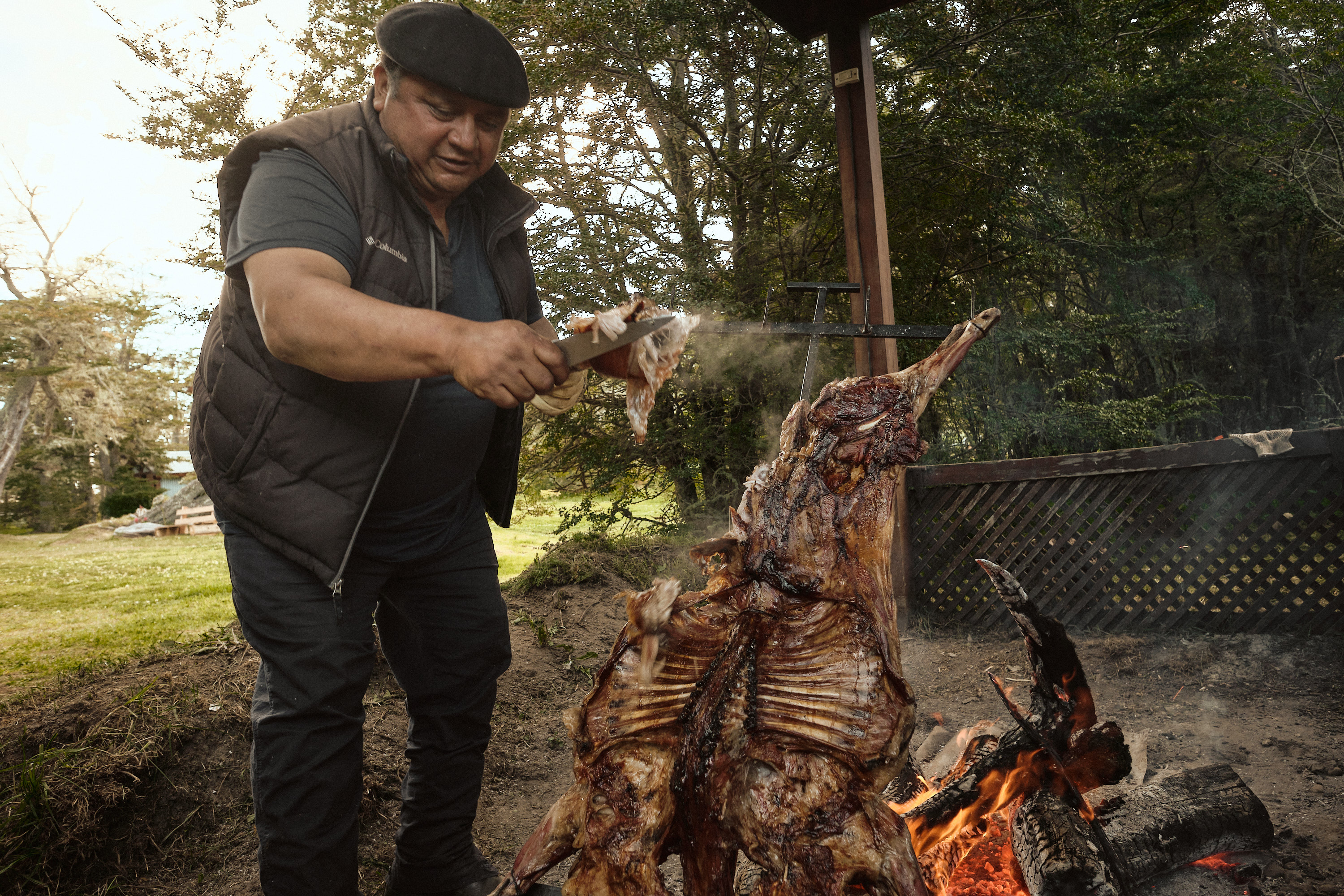
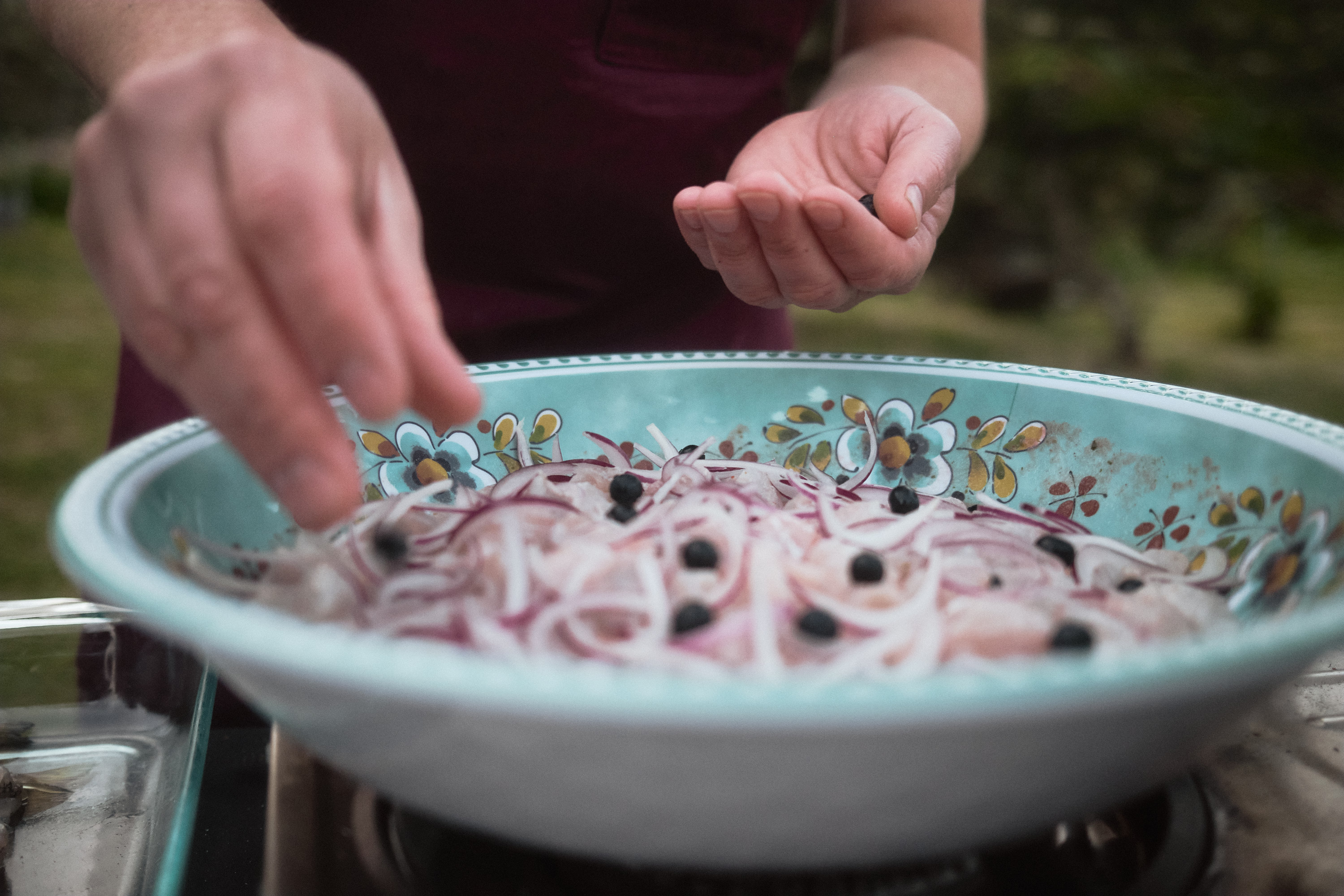
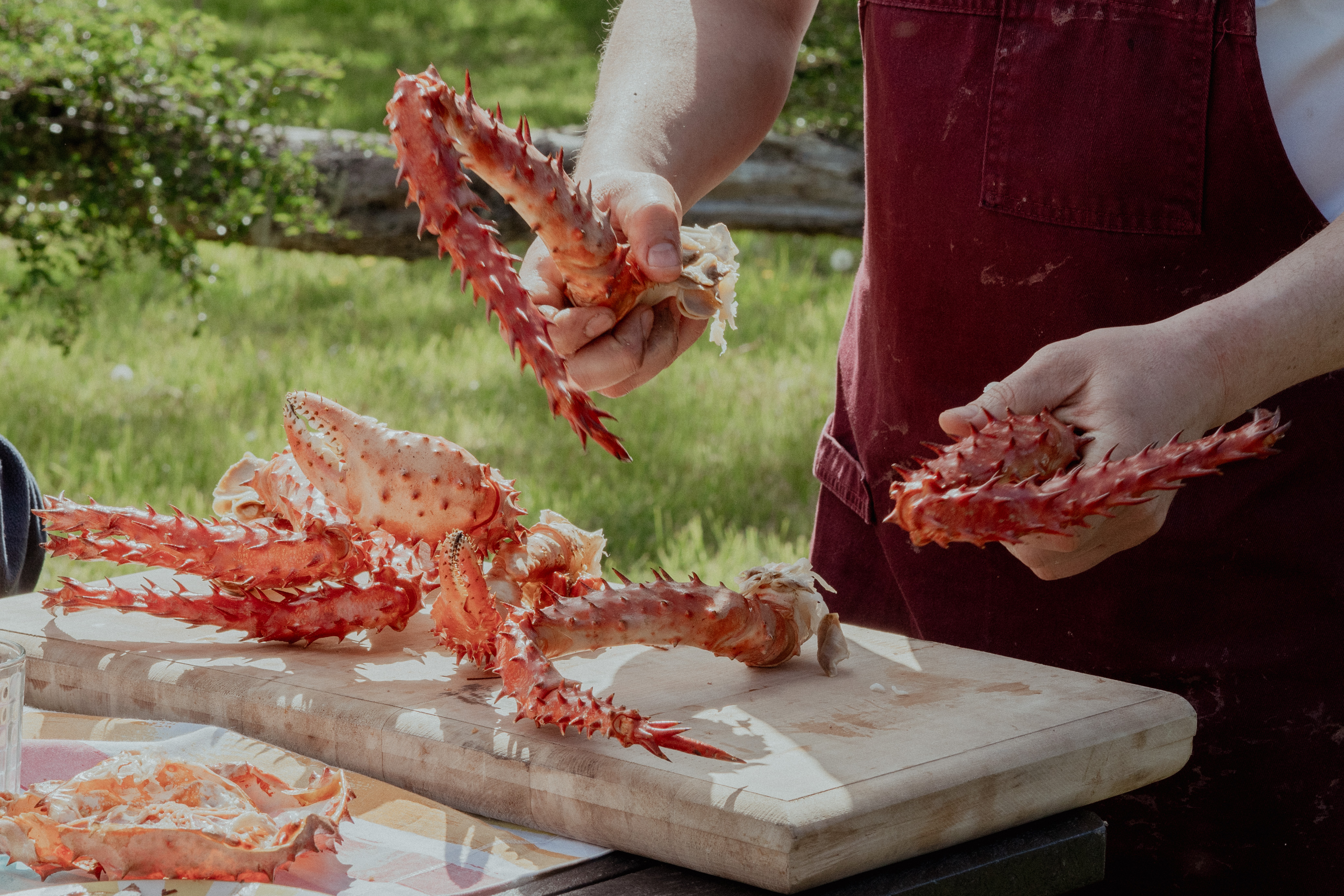
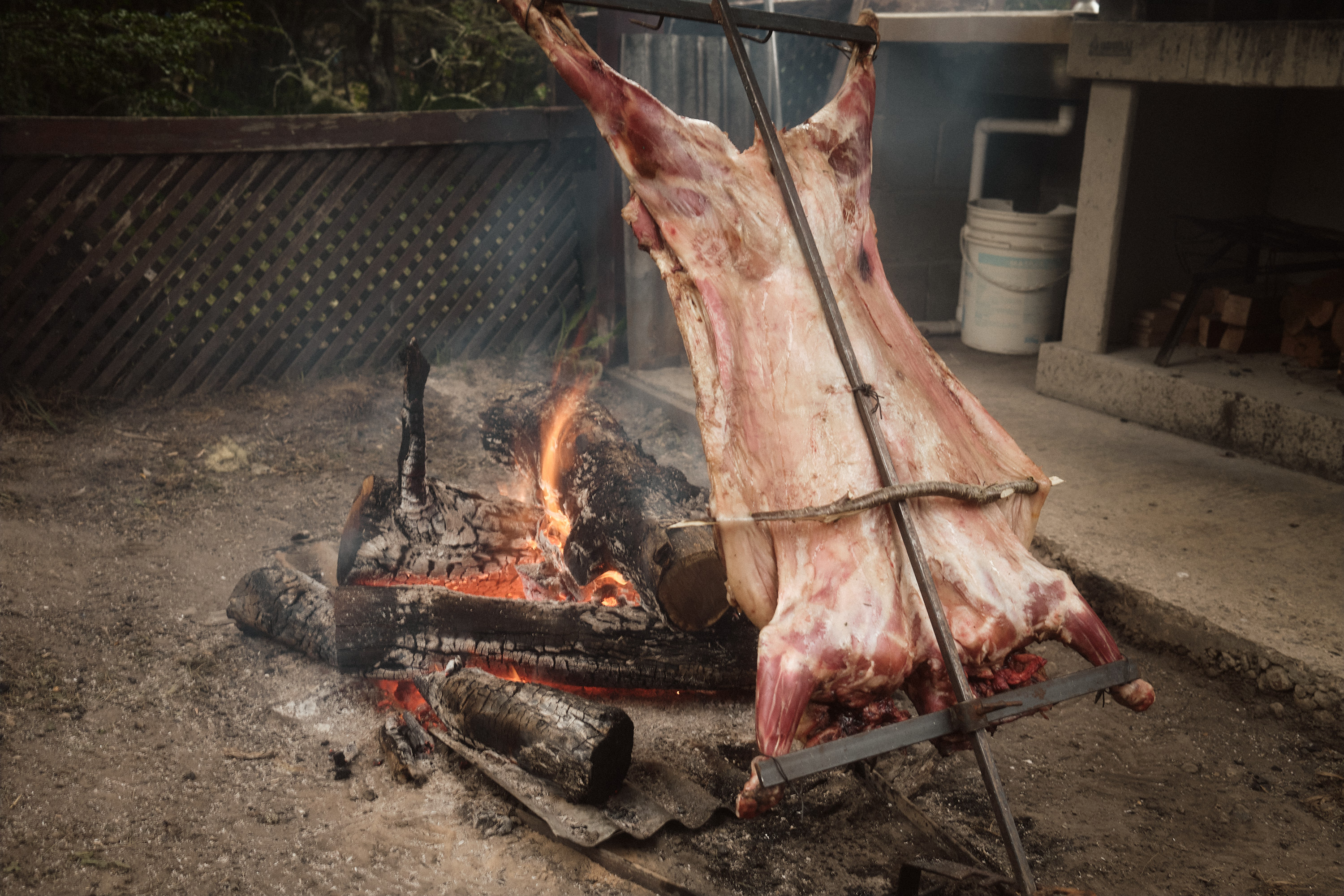
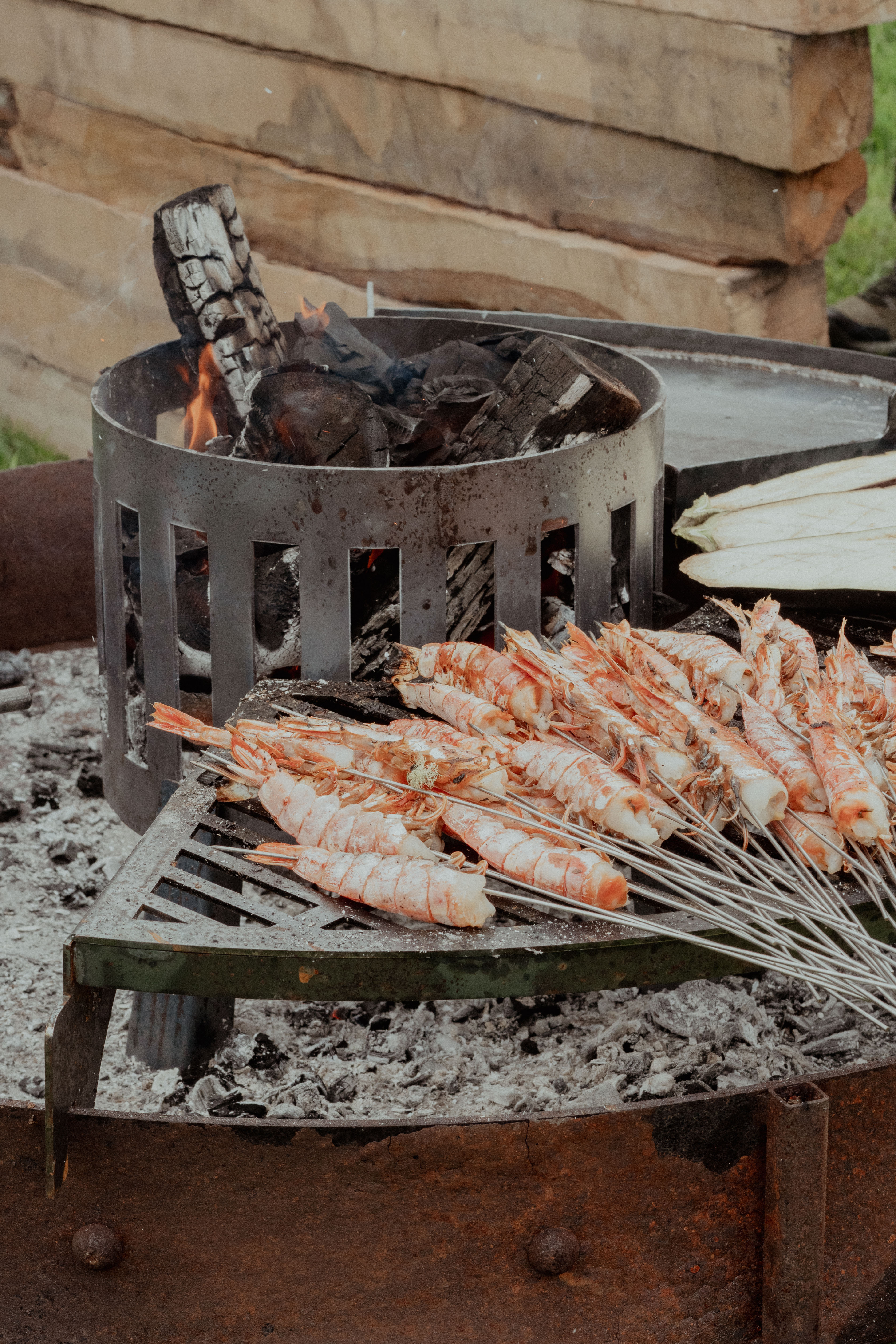
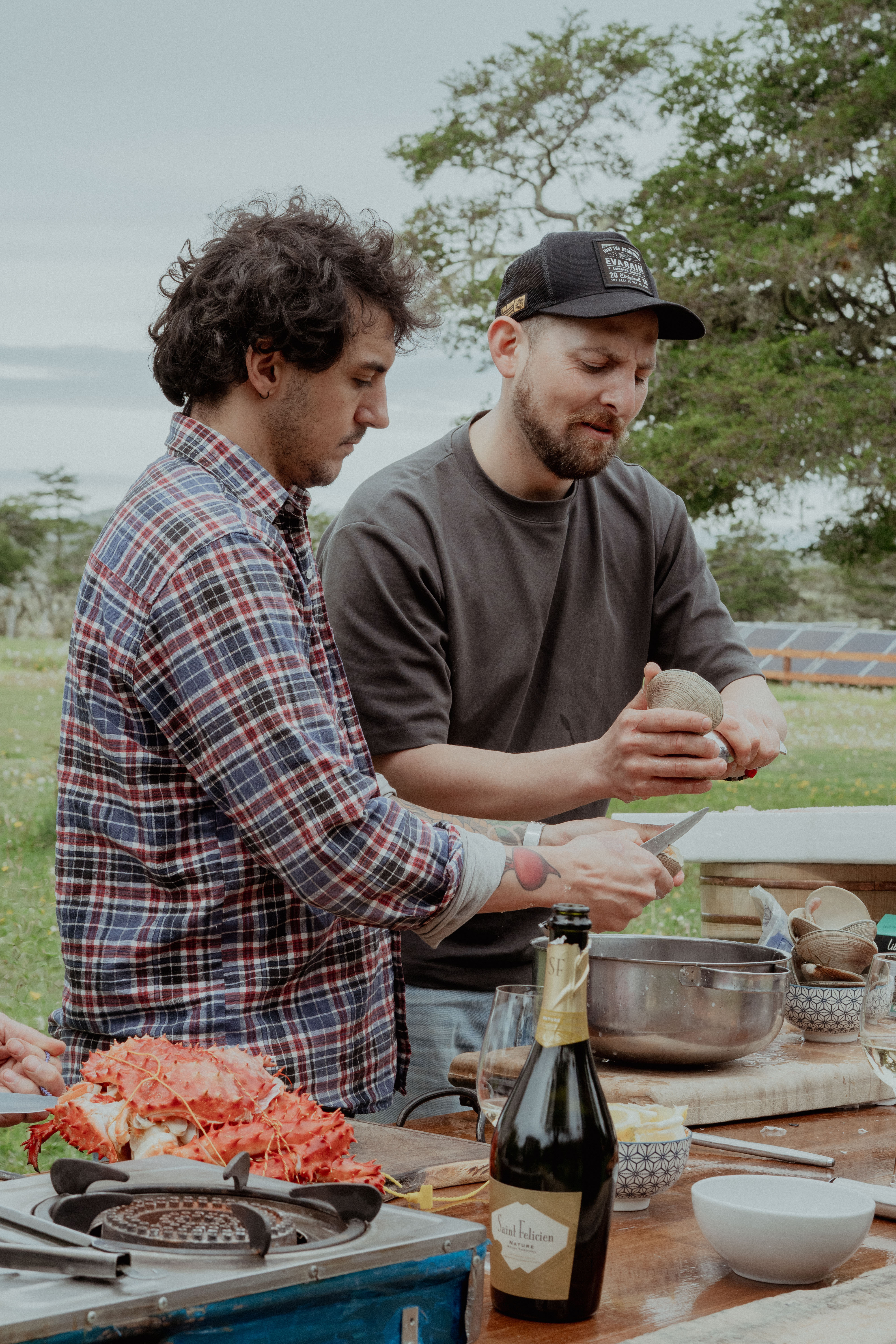
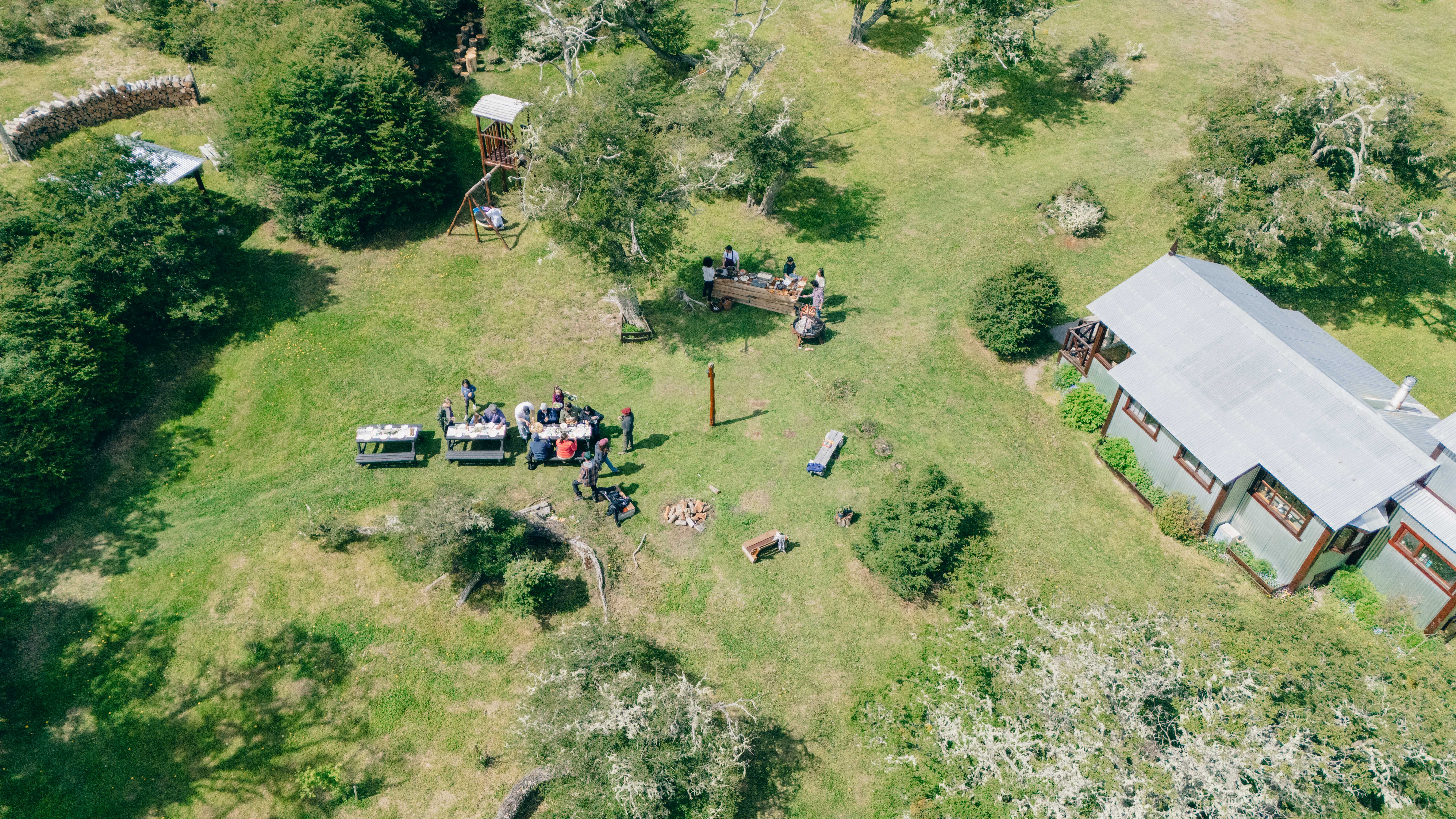
Some days that means preparing a traditional Argentine asado over the fire. Other days we drive to our neighbors Miguel and Silvia to pick up fresh fish and seafood from the coast, which we then prepare together back at the estancia. During summer we also use ingredients from our own garden, collecting herbs, salads and vegetables directly from the land before cooking.
Meals are shared together and often accompanied by Argentine wines, local flavors and long conversations around the table or the fire.
From time to time we also organize special Día del Campo gatherings at the estancia, bringing people together around food, music and a relaxed atmosphere.
For guests looking for a more exclusive culinary experience, it is also possible to arrange a private dinner with Jorge Monopoli , one of Argentina’s best-known chefs and owner of Kalma Resto, or with one of the other chefs we occasionally collaborate with. These experiences can be booked separately.
Las Loicas
Adventures
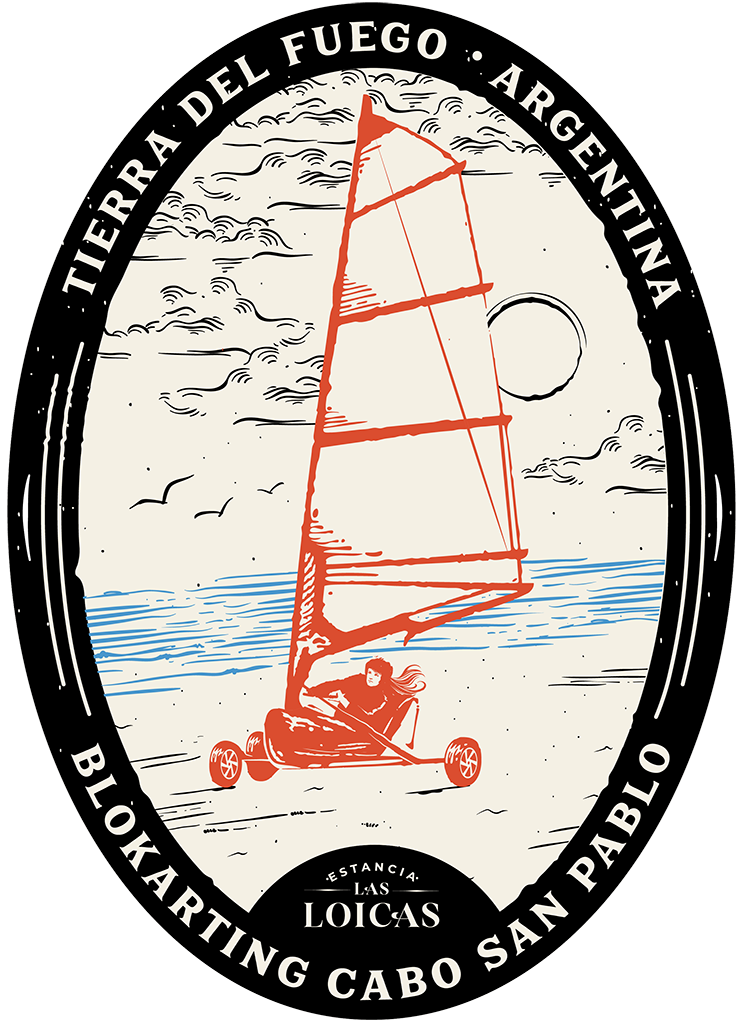
Beach Sailing
When the wind picks up, you will fly along the beach
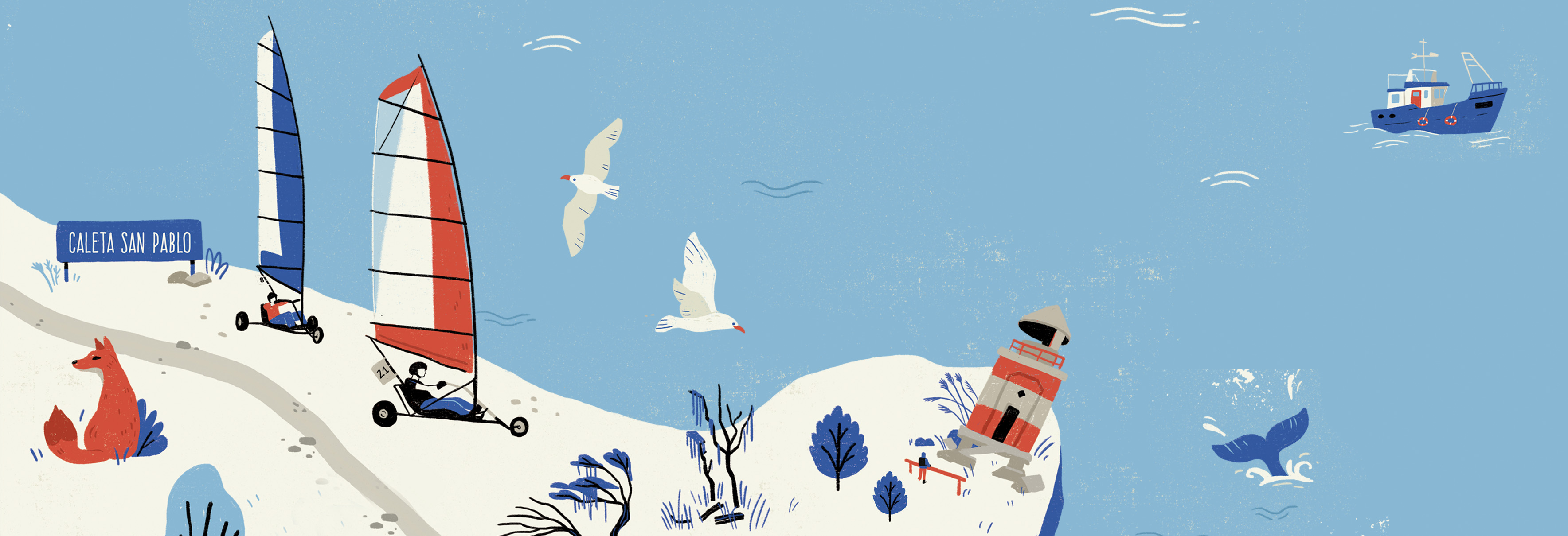
When the wind picks up — which it often does along the Atlantic coast — the beaches around Cabo San Pablo become the perfect place for beachsailing.
With the wide open beach, the constant Patagonian wind and almost endless space around you, it is an experience that feels both playful and surprisingly freeing. Some days the wind is soft and ideal for beginners, while on stronger wind days the speed and adrenaline can become part of the adventure.
Leentje, who spent many years sailing aboard Bark EUROPA, loves introducing guests to wind-powered sports and teaching the basics of blokarting. Most people are surprised by how quickly they learn. Within a short time, you are often already sailing comfortably across the beach.
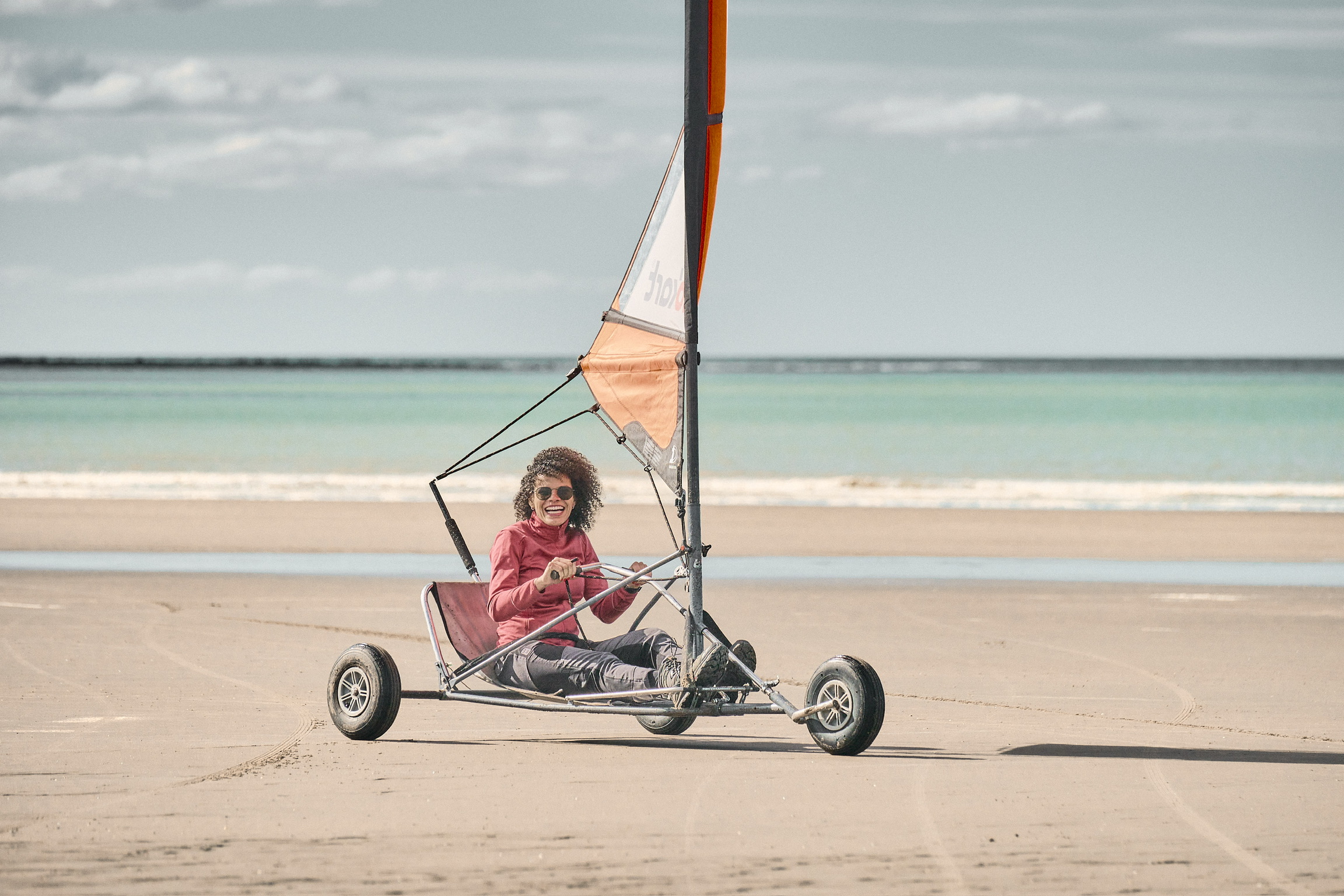
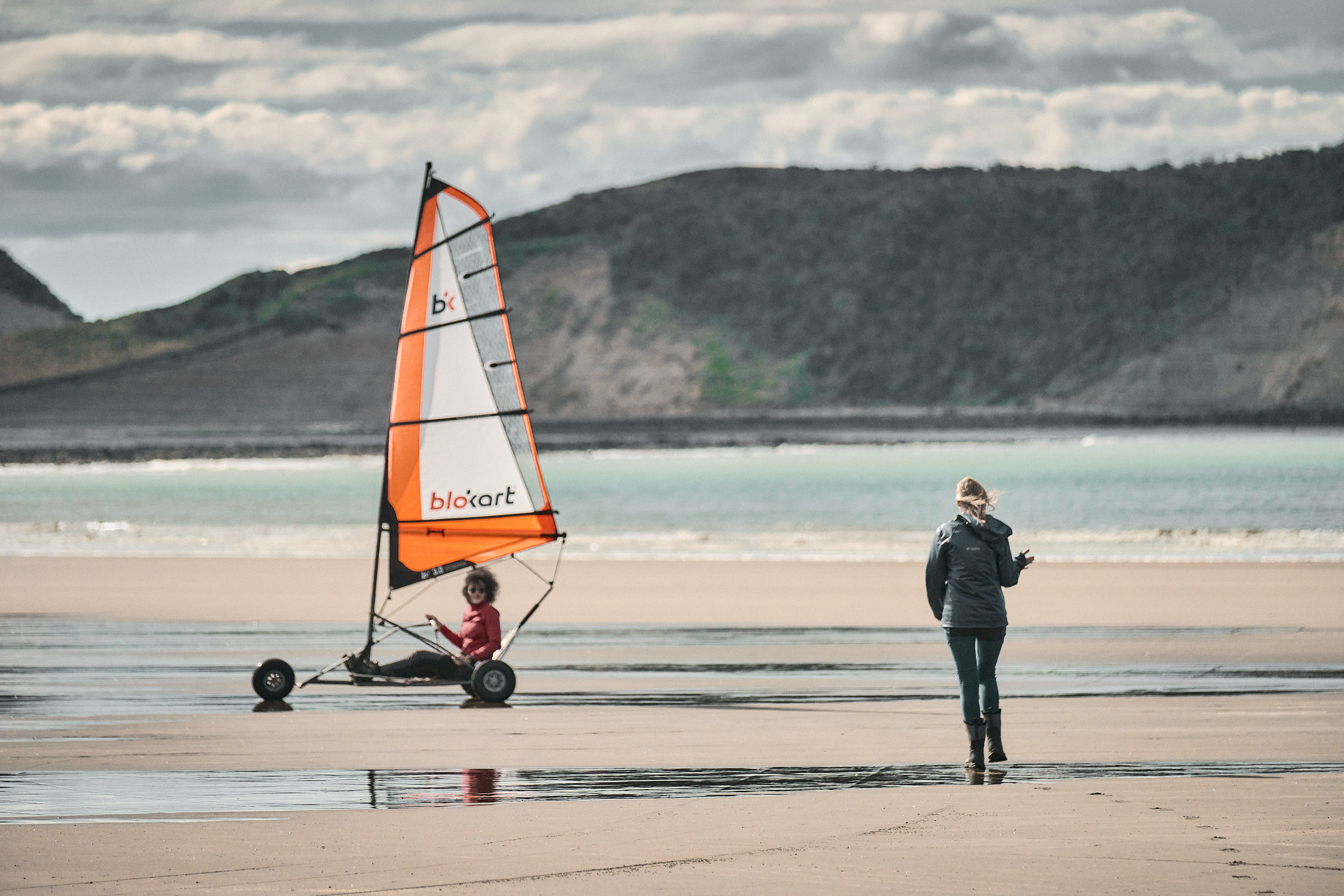
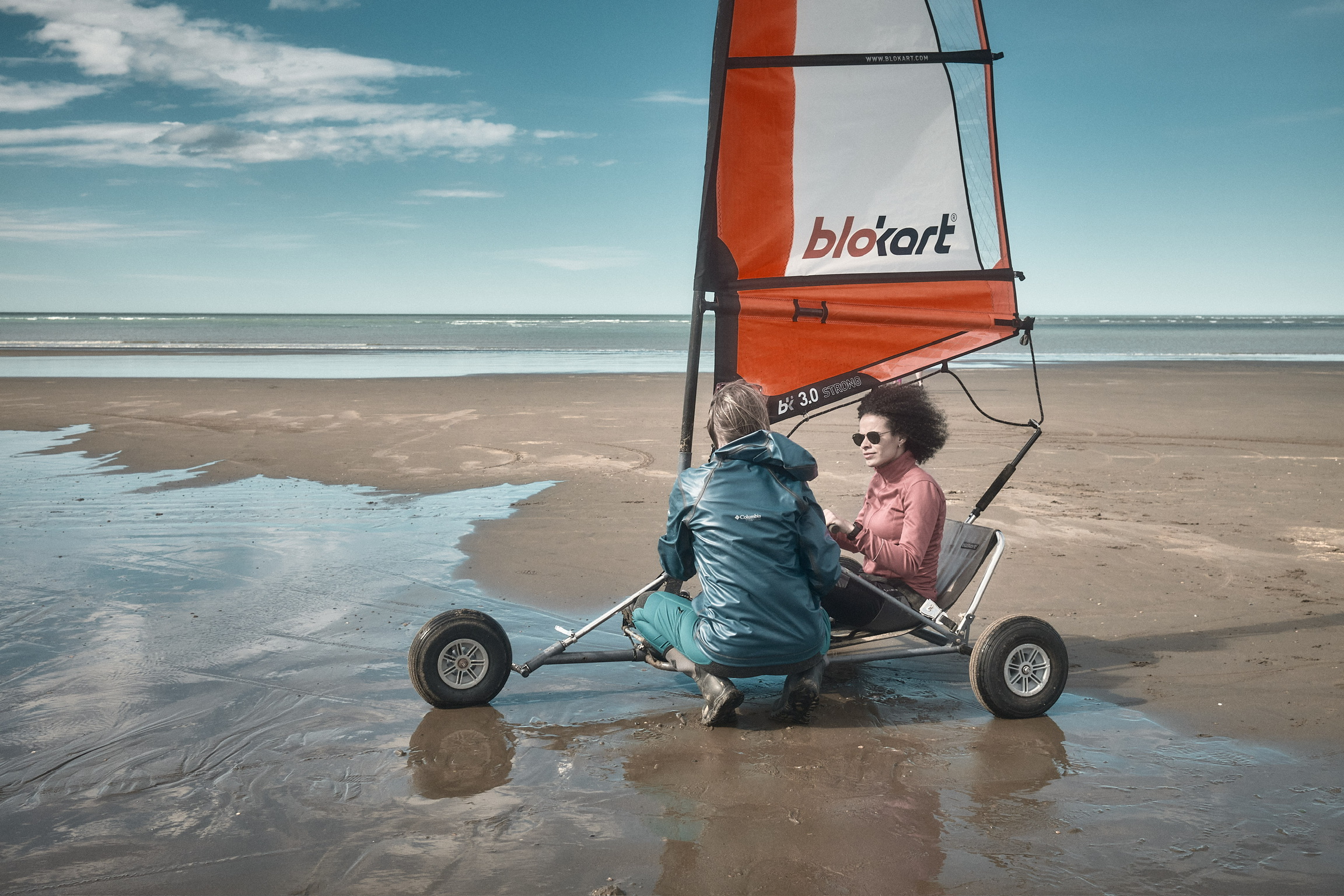
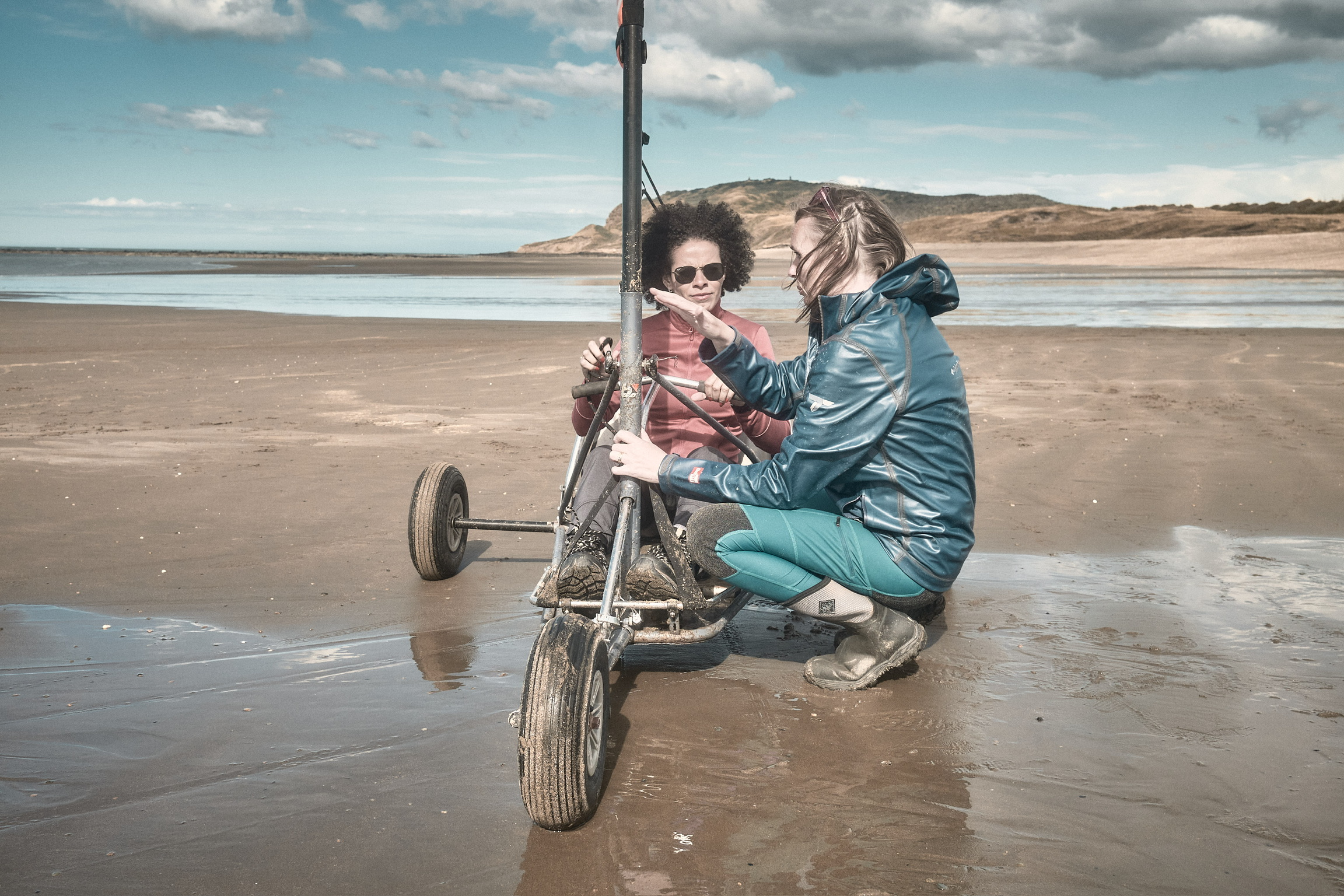
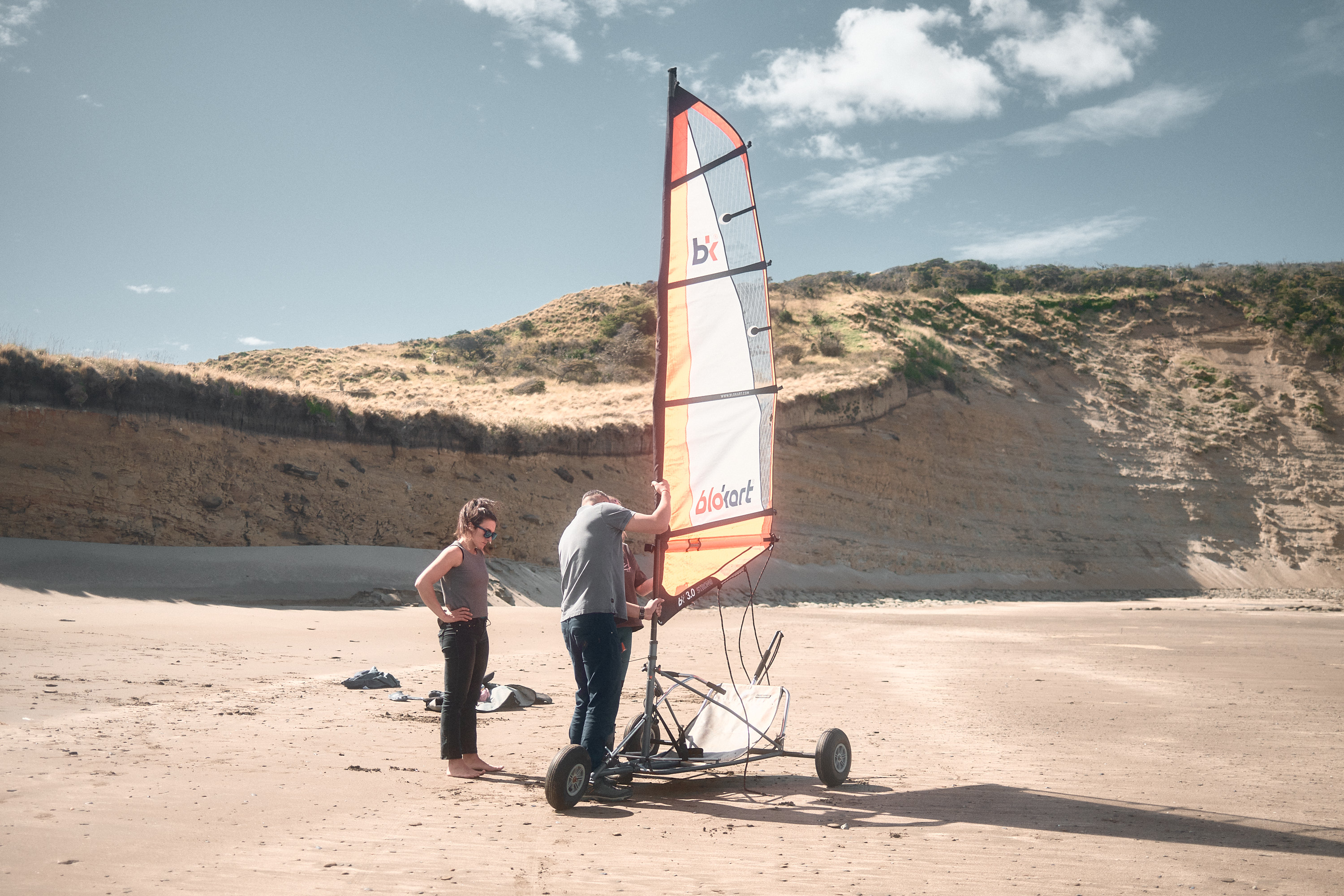
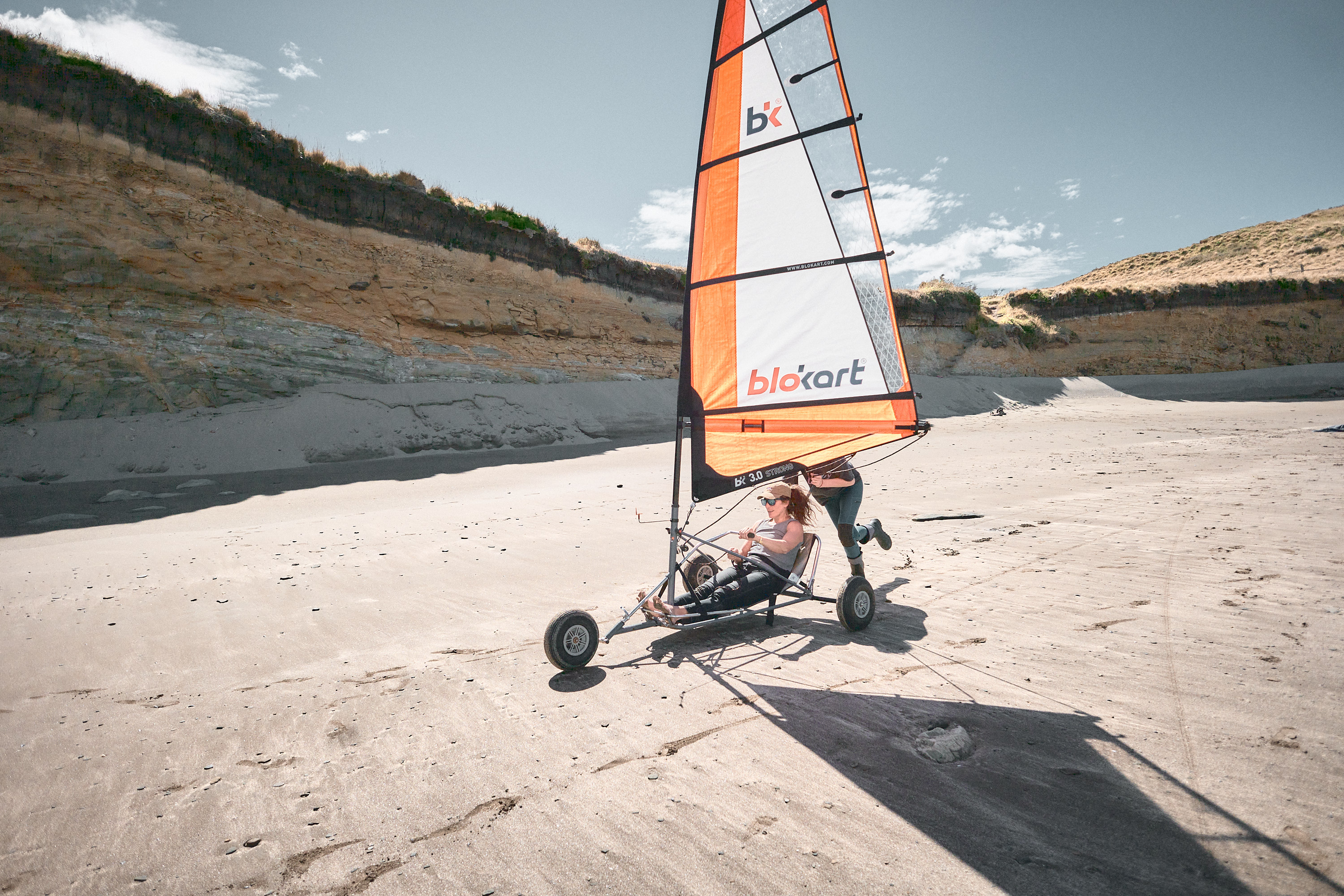
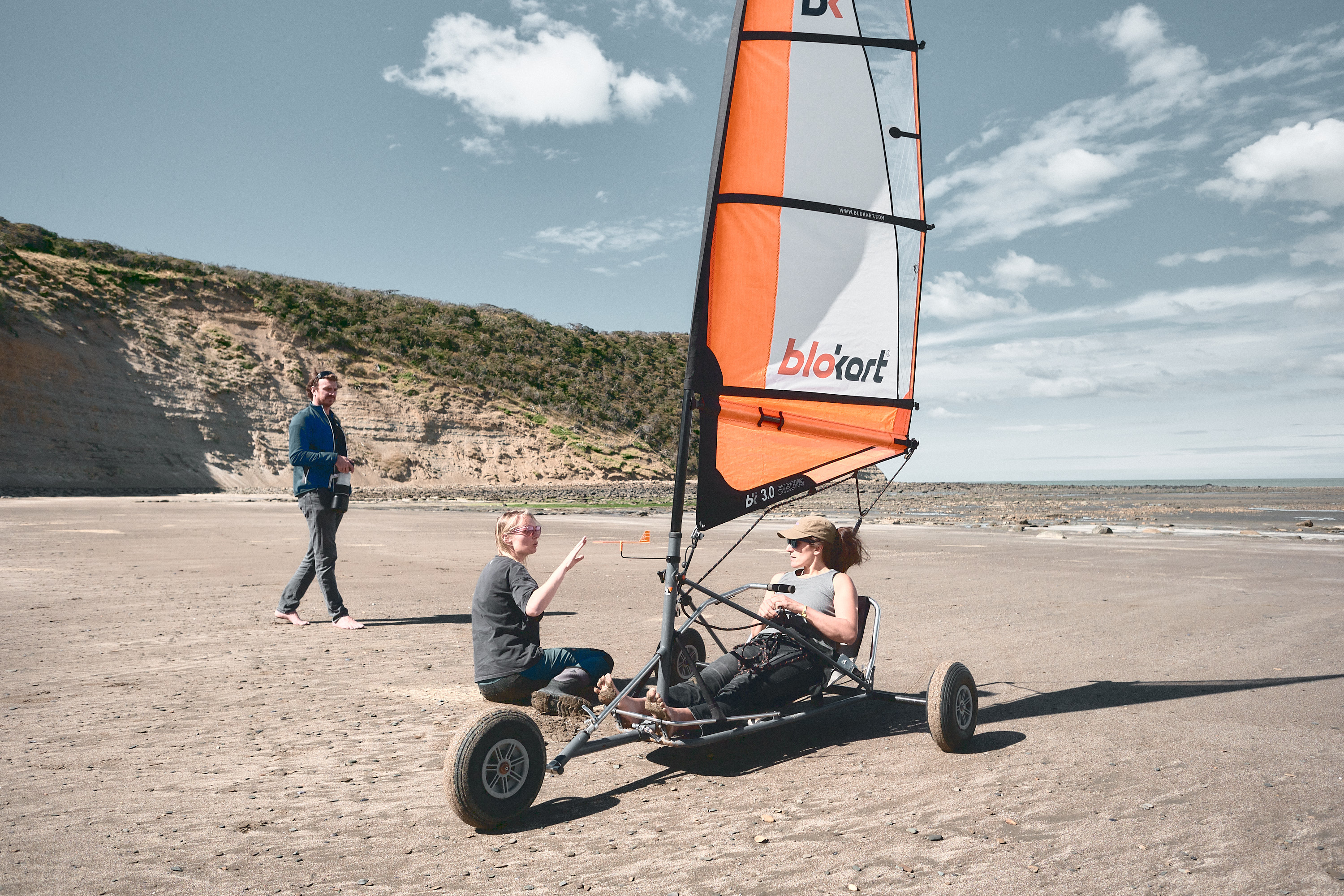
We currently have three blokarts available, with sails in different sizes so we can adapt to the wind conditions and the weight and experience level of each guest.
No previous experience is needed. Blokarting is easy to learn and suitable for both adults and older children. Whether you prefer a relaxed ride along the coast or want to experience more speed, we adjust the experience to the conditions and to the group.
Las Loicas
Beach Sailing
Leentje Toering & Hernán Baserga
Estancia Las Loicas
Homepage
Estancia Las Loicas
Accomodation
Adventures
Tierra del fuego
Journals
About us
Contact
Las Loicas Adventures
Antarctica expedition
Adventure forest
Las Noches del Loica
Argentine asado or cordero
Mountainbiking from Las Loicas
Visiting the Desdémona
Faro Cabo San Pablo
Food experience
Beach Sailing
About Las Loicas
Our History
About Hernan Baserga
About Leentje Toering